
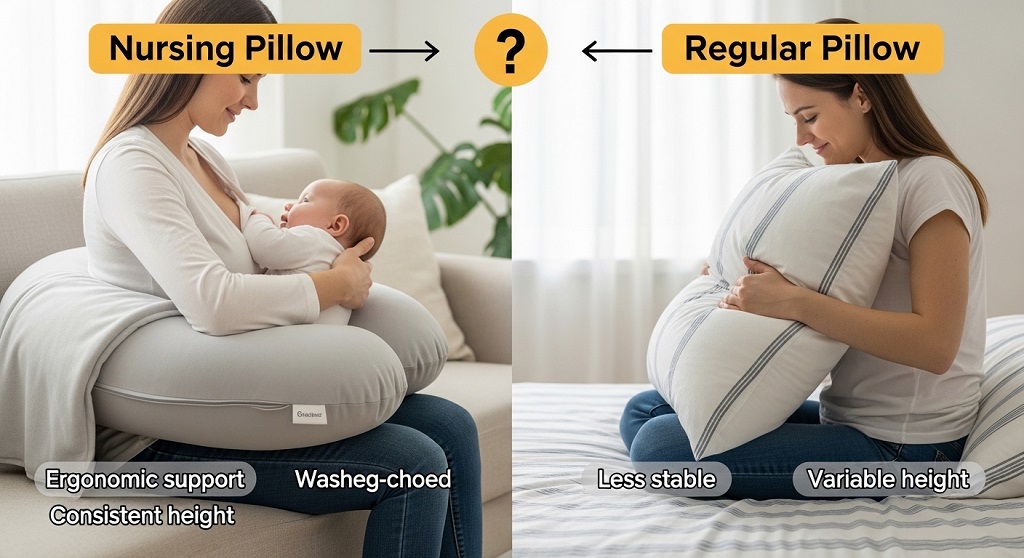
Choosing between a nursing pillow and a regular pillow for breastfeeding can be confusing for new parents. Both options offer unique support, but which truly benefits you and your baby the most? In this comprehensive guide, we’ll break down the pros, cons, and must-know facts to help you make an informed choice for comfortable and effective breastfeeding.
Breastfeeding is a natural experience, but it often comes with physical challenges. Many moms struggle with discomfort, poor latch, and arm fatigue when feeding their babies. While regular pillows have been the traditional solution, nursing pillows are specifically designed to address these pain points. In this article, we explore the critical differences between a nursing pillow vs regular pillow, answer the most common questions, and help you decide which one perfectly suits your needs. Read on for expert advice, practical tips, and must-know comparison facts for an easier breastfeeding journey.
What is a nursing pillow, and how does it differ from a regular pillow?

A nursing pillow is a specially designed pillow that supports the baby and parent during breastfeeding. Unlike a regular pillow, a nursing pillow is shaped to fit around the mother’s waist, providing consistent elevation and support for both the baby and the parent’s arms.
Nursing pillows come in various shapes such as C, U or crescent, purpose-built to help the baby latch comfortably and reduce the need for the parent to hunch over. Regular pillows lack this ergonomic design and may not provide uniform support. They’re often used for general comfort or sleep, but not intended for breastfeeding.
Why do moms struggle with using regular pillows for breastfeeding?
Regular pillows are not tailored for the unique positioning required during nursing. They often shift, flatten, or slide during a feeding, making it hard to maintain a steady, ergonomic hold for longer sessions.
This instability can lead to poor latch, arm and back strain, and frequent interruptions as moms reposition the pillow. Without proper elevation, babies may be improperly aligned, causing discomfort for both mom and child. Regular pillows can also vary widely in firmness, size, and height, making consistency almost impossible in supporting breastfeeding needs.
Are there proven benefits to using a nursing pillow during breastfeeding?
Yes, using a nursing pillow comes with numerous evidence-backed benefits. Nursing pillows provide consistent elevation, support the baby’s weight, and reduce strain on the mom’s arms, neck, and back—all crucial for comfortable, effective breastfeeding.
- Improved latch and positioning for easier feedings
- Reduced shoulder, arm, and back pain for moms
- Quick setup and easy repositioning without disturbing baby
- Adaptable for various nursing positions (cradle, football hold, etc.)
- Useful for tummy time, bottle feeding, and early infant sitting practice
Nursing pillows are especially helpful after a C-section, as they create a barrier between baby and incision, promoting healing and comfort.
Can a regular pillow ever be a better choice than a nursing pillow?
In some cases, a regular pillow can work for breastfeeding, particularly in a pinch or when budget is a concern. Some moms find them convenient if the right size and firmness are available.
If you already have supportive, firm pillows at home, you may find them sufficient for short-term feeding. However, they require frequent adjusting, and not all regular pillows offer the elevation or ergonomic fit necessary to truly support mom and baby during nursing. For occasional feeding or travel, a regular pillow can be an adequate backup, but may not be ideal for daily use.
How do you properly use a nursing pillow compared to a regular pillow?
Proper use of a nursing pillow involves wrapping it securely around the waist, ensuring it’s flush against your body. Place the baby on the pillow at breast height, supporting their head and neck while allowing natural positioning for a healthy latch.
- Place the nursing pillow around the waist, snug but comfortable.
- Position baby belly-to-belly at nipple level on the pillow.
- Use your arms to support the baby as needed, reducing pressure on your muscles.
- Adjust as necessary for comfort or when switching sides.
With a regular pillow, simply place it on your lap and try to elevate your baby, but you’ll often need to readjust and provide more arm support. This can lead to less stable feeding sessions and more fatigue.
What are the drawbacks of using each type of pillow?
Both types of pillows have some limitations. Nursing pillows, though ergonomic, can be expensive, bulky, and may not fit all body types. Regular pillows lack support and are not designed for feeding, leading to discomfort and alignment issues.
- Nursing Pillow Cons: Higher cost, storage/transport can be awkward, may not fit plus-size bodies perfectly.
- Regular Pillow Cons: Insufficient support, shifts easily, potential hygiene issues, leads to more body aches during feeding.
When frequently nursing, ergonomic features usually outweigh the cons of a nursing pillow.
What factors should you consider before choosing a nursing or regular pillow?
Consider your body type, feeding frequency, budget, and any special postpartum needs like C-section recovery. Also think about portability if you’ll nurse away from home often.
Evaluate the following:
- Your comfort and height
- Your baby’s size and positioning needs
- Ease of cleaning (removable covers help)
- Multipurpose usage (tummy time, bottle feeding)
- Storage, portability, and design preferences
The right choice balances comfort, practicality, and your individual circumstances.
How do nursing pillows and regular pillows compare side by side?
Nursing pillows shine in support and ergonomics, while regular pillows can fill in as a temporary solution. Review the table below for a quick feature comparison.
| Feature | Nursing Pillow | Regular Pillow |
|---|---|---|
| Design |  Ergonomic, body-hugging shape Ergonomic, body-hugging shape |
 Standard rectangular or square Standard rectangular or square |
| Support | Consistent, targeted support | Inconsistent, requires frequent adjustment |
| Breastfeeding Comfort | Reduces arm and back strain | Increases risk of aches and poor latch |
| Setup & Use | Quick, stays in place | Prone to shifting or flattening |
| Cost | Higher, investment item | Usually already owned, low/no cost |
| Hygiene | Often washable covers | Depends, but not always easy to clean |
| Portability | Sometimes bulky | Easy to use anywhere |
Which is the best choice for you: nursing pillow or regular pillow?
If breastfeeding is a daily part of your life, a nursing pillow is the best investment for comfort, support, and long-term health. If you’re on a tight budget or only breastfeeding occasionally, a firm regular pillow can work temporarily but may cause more discomfort over time.
Ultimately, the best choice comes down to your personal needs. If possible, try both before committing. If you experience pain, poor latch, or constantly need to adjust your setup, upgrading to a nursing pillow can make a significant positive difference for both you and your baby.
Conclusion: What’s the final verdict on nursing pillow vs regular pillow?
The right support can transform your breastfeeding experience. Nursing pillows are designed to keep both moms and babies comfortable, encourage better latch, and prevent back and arm pain. They’re especially recommended for frequent nursing, C-section recovery, and those needing ergonomic help.
Regular pillows may suffice in an emergency, but they’re not optimized for the unique needs of breastfeeding mothers. If possible, investing in a quality nursing pillow is a smart move for both comfort and convenience.
Ready to enjoy pain-free, successful breastfeeding? Consider adding a nursing pillow to your essential baby gear today for a happier, healthier feeding journey! Still have questions? Check out our FAQ below for more details.
FAQs About Nursing Pillow vs Regular Pillow
Is a nursing pillow necessary for breastfeeding success?
No, a nursing pillow is not strictly necessary, but most moms find it significantly improves comfort and helps with proper baby positioning during feeds. It’s highly recommended, especially for new mothers or those recovering from a C-section.
Can I use a nursing pillow for bottle feeding as well?
Absolutely! Nursing pillows are versatile and support both breastfeeding and bottle feeding. They help reduce strain on your wrists and arms, regardless of how you feed your baby.
Will a regular pillow cause problems for my baby’s latch?
Using a regular pillow can sometimes make it harder to achieve a good latch because the pillow may shift or flatten, leading to poor positioning. This can cause nipple pain or feeding difficulties if not carefully managed.
Are nursing pillows washable?
Most nursing pillows come with machine-washable covers, making them easy to care for and keep clean. Always check the manufacturer’s instructions for cleaning the pillow itself and the cover.
How long should I use a nursing pillow?
You can use a nursing pillow as long as you find it useful. Most parents use it for several months, until the baby can sit up on their own or when breastfeeding becomes easier without additional support.
What should I do if my nursing pillow doesn’t fit comfortably?
If your nursing pillow feels too tight or loose, check if it’s adjustable or consider trying a different brand or style. Some come with straps or flaps to help secure a better fit for various body shapes.
Can I travel with a nursing pillow?
Many nursing pillows are portable, but some larger or firmer models may be too bulky for travel. For on-the-go, look for compact designs or travel-friendly options made specifically for nursing on the move.
Read More Also: How to make mugs a meaningful gift
Learn More: DIY Home Automation: Complete Beginner Setup Guide