Key Takeaways
- HEPA filters alone cannot stop allergens if the vacuum housing leaks air.
- A sealed system forces all air through the filter, not around it.
- Vacuums without HEPA filtration can release particles as large as 50 microns.
- Independent certification confirms real-world allergen performance.
- Bag type and maintenance both affect how well a vacuum protects your air.
Allergy sufferers often assume any HEPA vacuum will solve their dust problem. However, the filter is only part of the picture. Air can leak around a filter through gaps in the housing. As detailed by industry testing specialists at vacuum cleaning bestvacuumcleaner.us/, true air purification requires both filtration and sealed housing to work together. You will learn what actually protects your indoor air.
Why Allergens Escape From Some Vacuums
Vacuuming should remove allergens from your home, not spread them further. However, many standard vacuums make allergy symptoms worse instead of better.
According to Sylvane, most traditional vacuums lack the ability to capture the tiny particles that trigger allergic reactions. Air passes through the collected dust and debris before returning to the room. Additionally, allergens escape through leaks in the vacuum’s housing itself.
The particle size gap is significant. Sylvane states that vacuums without HEPA filtration can allow debris as large as 50 microns to escape back into your home’s air. For comparison, dust mite allergen particles and fine dander are often far smaller than this. Therefore, many common vacuums simply redistribute allergens rather than removing them.
This problem explains a common allergy complaint. Some people report sneezing more during or after vacuuming, not less. Achoo Allergy frames this shift in mindset clearly. A quality vacuum should let you clean for your health, not just for appearance, by capturing ultra-fine particles like dander, dust mite allergen, and pollen.
Understanding this exhaust problem is the first step toward a better choice. The next sections explain the two features that solve it together.
How HEPA Filtration Captures Allergens
HEPA filtration forms the core defense against airborne allergens. However, the standard behind the label matters as much as the label itself.
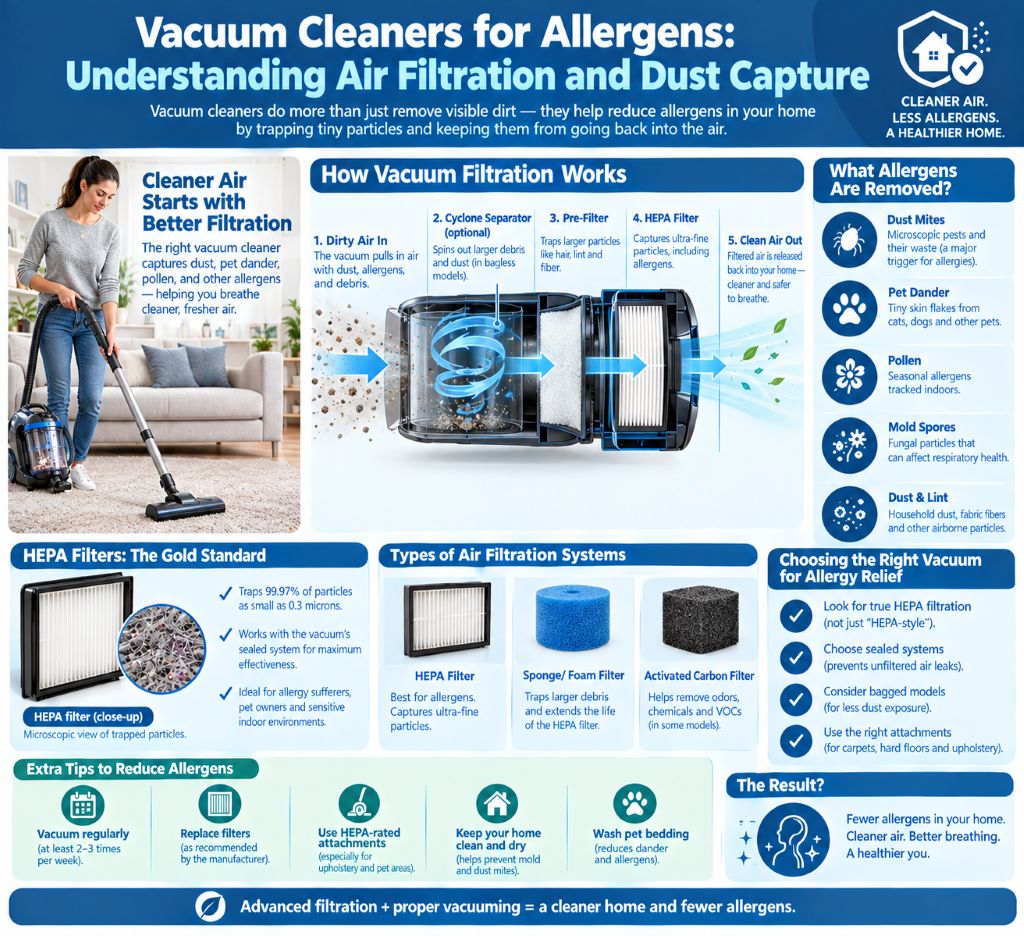
Achoo Allergy explains the certified standard clearly. Certified HEPA filters trap a minimum of 99.97 percent of all particles at 0.3 microns or larger. European-certified HEPA filters use a slightly different standard, trapping 99.95 percent of particles at 0.1 microns or larger. Either standard captures the common allergens people worry about most.
This capture rate matters because most allergens fall within a trappable size range. Dust mite waste, pet dander, mold spores, and pollen are all larger than the 0.3-micron test size HEPA filters are rated against. Therefore, a true HEPA filter captures the large majority of household allergen sources.
Sylvane makes an important comparison here. HEPA vacuum filters provide the same level of filtration used in many air purifiers. As a result, air leaving a properly filtered vacuum can actually be cleaner than the air that entered it. This reversal is the whole point of HEPA-rated filtration.
However, not every filter labeled HEPA meets the certified standard. A recent HEPA vacuum review guide notes that a true HEPA filter is rated H13 or H14 and captures 99.97 percent of particles down to 0.3 microns. Always confirm this specific rating rather than trusting general marketing language.
Why a Sealed System Matters as Much as the Filter
A powerful HEPA filter cannot help if dirty air bypasses it entirely. This is where sealed system design becomes essential.
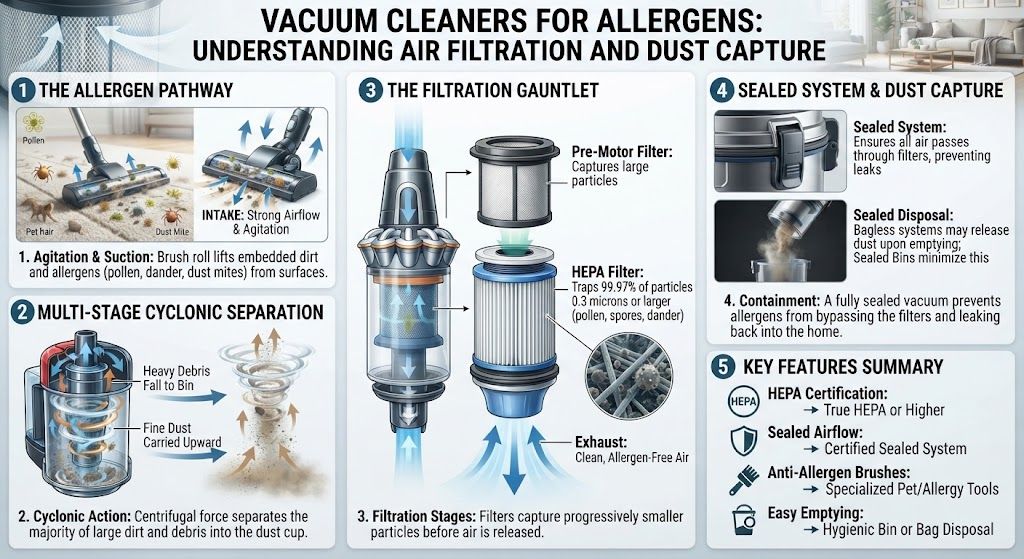
Sylvane defines this feature directly. A sealed system means the vacuum has an airtight, or sealed, housing. Without this design, dust and allergens can leak back into your environment through seams or cracks in the vacuum’s body, regardless of how good the filter itself is.
A recent buying guide reinforces this point strongly. It states that a true HEPA filter can still leak allergens back into your living room if the housing is not airtight. This detail catches many buyers off guard, since they assume the HEPA label alone guarantees clean air.
Miele’s approach illustrates how sealed design works in practice. Their Sealed System technology is described as enabling HEPA certification specifically because it ensures lung-damaging particles go in the vacuum and stay in the vacuum. The filter and the sealed housing function as one combined system, not two separate features.
For people with severe allergy or asthma symptoms, this combination matters most. Sylvane notes that for some people, a HEPA filter alone is not enough, and severe symptoms require going a step beyond filtration into fully sealed construction. Therefore, always check for both features together, not just the filter rating.
Independent Certification and What It Confirms
Marketing claims about allergen protection vary widely between brands. Independent certification offers a more reliable signal.
The Asthma and Allergy Foundation of America runs a certification program with its partner, Allergy Standards Limited. According to Facility Executive, this asthma and allergy friendly Certification Program helps consumers identify products more suitable for people with asthma and allergies. Certification requires passing specific, independent testing.
One certified commercial example shows what this testing covers. The Sanitaire EON Allergen model earned this certification using a sealed HEPA system rated at 99.97 percent particle capture, according to FacilitiesNet. It also received the Carpet & Rug Institute’s Gold Seal of Approval, the highest level that organization awards.
This layered testing approach matters because it verifies real performance, not just component specs. CMM Online describes the same model as rigorously tested and scientifically proven to reduce exposure to allergens and irritants. Independent verification carries more weight than a manufacturer’s own claims.
A recent vacuum review roundup confirms how rare full certification remains. Of eight HEPA vacuums tested, the reviewer noted that only three carried true asthma and allergy friendly certification. Therefore, checking for this specific certification narrows your choices meaningfully.
Bag Type and Dust Handling
Beyond the filter and housing, how a vacuum handles collected dust affects your allergen exposure. This includes both bag design and emptying habits.
Sylvane recommends looking for vacuums that use multi-layered or hygienic bags alongside sealed HEPA construction. These bags add an extra containment layer before air even reaches the main filter. Consequently, less fine dust challenges the filter directly.
Bagless models require different handling to limit allergen exposure. Emptying a bagless bin exposes you directly to the collected dust. Therefore, allergy sufferers using bagless vacuums should empty bins outdoors when possible and avoid inhaling the dust cloud that often forms during this step.
Filter maintenance also affects ongoing performance. A washable HEPA filter, like the one used in the Sanitaire EON Allergen described by Facility Executive, needs regular cleaning to maintain its rated capture rate. A clogged or damaged filter cannot perform at its certified level, regardless of its original rating.
Consider these practices for better dust handling.
- Choose sealed bags over open bins if you have severe allergies
- Empty bagless bins slowly and outdoors when possible
- Replace or wash filters on the manufacturer’s recommended schedule
- Store extra bags or filters so replacement never gets delayed
- Wipe down the exterior housing regularly to remove settled dust
Choosing a Vacuum for Allergy Relief
With the key features explained, use this checklist when comparing specific models.
- Confirm the filter is rated true HEPA, not HEPA-type or HEPA-like.
- Look for stated sealed system construction in the product details.
- Check for asthma and allergy friendly certification where available.
- Choose multi-layered bags if you have severe allergy symptoms.
- Compare noise ratings if quiet operation matters for your household.
- Confirm filters are washable or easily replaceable long term.
Noise level might seem unrelated to allergens, but it affects real-world use. The certified Sanitaire model, for example, operates at 68 dBA, roughly the level of a human conversation. Quieter operation encourages more frequent cleaning, which further reduces allergen buildup over time.
Keep in mind that most indoor time happens at home. Facility Executive notes that Americans spend approximately 90 percent of their time indoors on average. This statistic underscores why indoor air quality, not just visible cleanliness, deserves real attention from allergy sufferers.
Finally, remember that no vacuum eliminates allergens completely. Combining a properly sealed HEPA vacuum with regular cleaning, good ventilation, and other allergen-reduction habits produces the best results. A vacuum is one important tool within a larger strategy.
Conclusion
Protecting your indoor air from allergens requires more than a HEPA label. True HEPA filtration must pair with a sealed system to keep allergens fully contained. Independent certification from groups like the Asthma and Allergy Foundation of America offers the most reliable confirmation. Bag type and regular maintenance round out real-world performance. For hardwood floors, choosing the right vacuum also helps prevent surface damage, so consider our guide on choose the best vacuum for hardwood floors without scratching.
Check your current vacuum against these standards today. Look specifically for true HEPA ratings, sealed construction, and independent certification. Choose a vacuum that meets all three, and your home’s air quality will genuinely improve with every cleaning session.
Frequently Asked Questions
What makes a vacuum good for allergies?
A true HEPA filter combined with a sealed system works best. Independent certification confirms this performance reliably.
Is HEPA filtration alone enough for severe allergies?
Not always. Without a sealed housing, allergens can still leak out through gaps and seams.
What does asthma and allergy friendly certification mean?
It means independent testing confirmed the vacuum reduces allergen exposure. The Asthma and Allergy Foundation of America runs this program.
Are bagged vacuums better for allergy sufferers?
Often yes, especially with multi-layered, hygienic bags. Sealed bags limit dust exposure during disposal.
How often should I clean or replace a HEPA filter?
Follow the manufacturer’s schedule, typically every six to twelve months. A clogged filter cannot filter at its rated level.