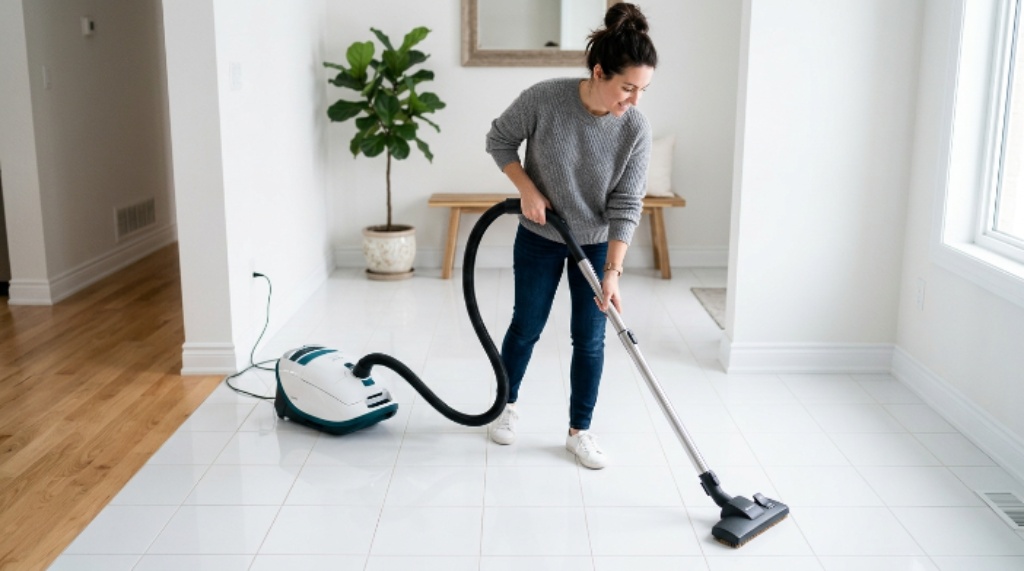
Choosing the right vacuum cleaner for tile floors can feel overwhelming. There are dozens of models, dozens of claims, and very little guidance on what actually matters. However, once you know what to look for, the process becomes much simpler. This guide walks you through everything you need to know before you buy.
Why Your Regular Vacuum May Be Hurting Your Tiles
Not all vacuums are built with hard floors in mind. Many models are designed primarily for carpet. They use stiff bristles, hard plastic edges, and strong suction settings that work well on fiber but can drag grit across a tile surface like sandpaper.
Tile is more forgiving than hardwood, but it is not indestructible. The grout lines between tiles collect debris. When a vacuum’s beater bar spins over that debris, it can grind particles into the tile face or chip the glaze. Over time, this leaves your floor looking dull and scratched.
Therefore, your first goal is to find a vacuum that handles tile gently while still picking up dirt effectively.
The Most Important Features to Look For
Soft Brush Rolls or the Ability to Turn Them Off
The beater bar, also called a brush roll, is the spinning cylinder under the vacuum head. On carpet, it agitates fibers to loosen embedded dirt. On tile, it is mostly unnecessary and often harmful.
Look for a vacuum with a soft brush roll made from microfiber or felt. Alternatively, choose a model that lets you switch the brush roll off entirely. Many stick vacuums and some canister models offer this feature. It is one of the most practical things you can have on a hard floor machine.
Sealed or Rubberized Wheels
The wheels and base of a vacuum slide across your floor with every pass. Hard plastic wheels can leave fine scratches, especially if they pick up a piece of grit and drag it along. Rubberized or coated wheels grip the floor without marking it. When you compare models, flip them over and check the wheel material. It is a small detail that makes a real difference.
Adjustable Suction Settings
Too much suction on a hard, flat surface can cause the vacuum to drag and create resistance. This makes it harder to push and increases the chance of the head grinding against the tile. A machine with variable suction lets you dial back the power for hard floors and increase it when needed. This flexibility is worth paying for.
Low-Profile or Swivel Head Design
Tiles often extend into tight spaces, under furniture, and around cabinet bases. A vacuum head that swivels easily and sits close to the ground reaches these areas without forcing you to apply extra pressure. Less pressure means less friction between the head and the floor surface.
HEPA or Fine Filtration
Tile and grout collect fine dust particles that standard filters miss. These particles recirculate into the air when a poor-quality filter fails to capture them. A HEPA filter traps particles down to 0.3 microns. This matters especially in homes with allergy sufferers or pets.
Types of Vacuums That Work Well on Tile
Canister Vacuums
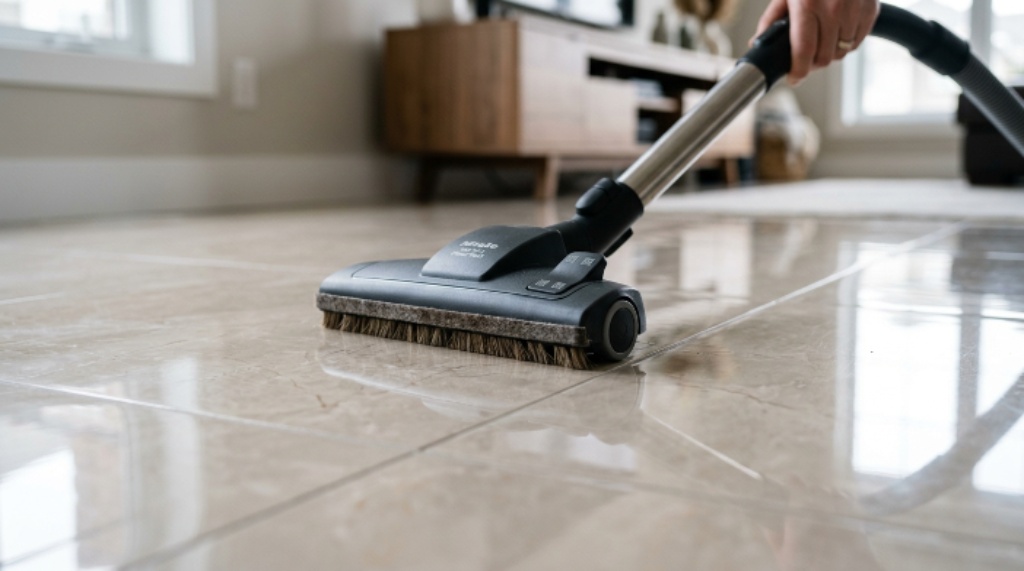
Canister vacuums separate the motor and dustbin from the cleaning head. This design gives you a lightweight head that glides smoothly over tile. Additionally, most canister models come with a hard floor attachment, which is a flat brush with soft bristles that sweeps without scratching. If you have mostly hard floors throughout your home, a canister vacuum is often the best all-around choice.
Stick Vacuums
Stick vacuums are slim, lightweight, and easy to maneuver. Many modern cordless stick models include a hard floor mode that disables the brush roll and reduces suction. They are ideal for quick daily cleanups and work particularly well in smaller homes or apartments. However, their dustbins tend to be smaller, so they require more frequent emptying.
Robot Vacuums
Robot vacuums have become a popular option for tile floors. They run automatically, keeping floors clean without any effort on your part. Most modern robot vacuums use soft rubber brush rolls or side brushes rather than stiff bristles. They are also low to the ground, which prevents dragging. The downside is that they work best as a supplement to a regular vacuum rather than a full replacement, since they can miss corners and struggle with heavy debris.
Wet-Dry Vacuums
If your tile floors also deal with spills, mud, or liquid messes, a wet-dry vacuum is worth considering. These machines handle both dry debris and liquids. They tend to be bulkier, but they are extremely versatile for kitchens, bathrooms, and utility rooms with tile floors.
What to Avoid When Shopping
Some features that sound appealing can actually work against you on tile. Avoid vacuums that only offer high suction with no adjustment. Avoid models where the brush roll cannot be turned off. Also, be cautious of very cheap machines with hard plastic undersides and no cushioning. These are more likely to leave marks.
Reading tile floor vacuum reviews from verified buyers is one of the best ways to spot these problems. Look for mentions of scratching, suction drag, or difficult maneuverability on hard floors. Real user feedback often catches issues that manufacturer specs do not mention.
Tips for Using Your Vacuum Without Scratching Tiles
Even the best machine can cause damage if used incorrectly. Here are a few simple habits that help protect your floors.
- Clean the vacuum’s wheels and brush roll regularly. Debris caught in these areas becomes an abrasive.
- Empty the dustbin before it gets too full. An overfull bin reduces suction efficiency and can cause the machine to work harder.
- Sweep or dry mop first if there is heavy debris. Let the vacuum handle the fine dust and smaller particles.
- Store your vacuum upright or hanging so the brush roll does not rest on the floor.
- Check the underside of the vacuum head occasionally for any cracked plastic or worn edges that could scratch surfaces.
How to Compare Models Before You Buy
Once you have narrowed your list to a few non-scratch vacuum options, compare them side by side using these criteria: brush roll type, suction adjustment, filtration quality, wheel material, head design, and cord or battery length. Price matters, but it should be weighed against how long the machine will last and how well it protects your specific floor type.
If possible, test a vacuum in a store or buy from a retailer with a return policy. Walk it across a hard surface and pay attention to how easily it moves and whether it feels like it is dragging.
Conclusion
Picking a vacuum cleaner for tile floors comes down to a handful of key decisions. You want soft or removable brush rolls, rubberized wheels, adjustable suction, and a filtration system that traps fine dust. Canister and stick vacuums tend to perform best on hard floors, while robot vacuums work well as a daily maintenance tool. Always read tile floor vacuum reviews from real users to catch practical issues before you buy. With the right machine and proper habits, your tiles will stay clean and scratch-free for years to come.
Frequently Asked Questions
Can I use a regular carpet vacuum on tile floors?
You can, but it is not recommended. Carpet vacuums often have stiff brush rolls and no suction adjustment. These features can scratch tile and grout over time. It is better to use a machine designed or adjustable for hard floor use.
What is the safest type of brush roll for tile?
Soft microfiber or felt brush rolls are the safest for tile. They pick up fine dust without scratching the surface. Even better, look for a vacuum that lets you turn the brush roll off entirely when cleaning hard floors.
How often should I vacuum tile floors?
High-traffic tile areas benefit from vacuuming two to three times per week. Kitchens and entryways may need daily attention. Regular vacuuming prevents grit from building up and scratching the surface underfoot.
Do robot vacuums scratch tile floors?
Most modern robot vacuums are designed with soft rubber or bristle-free brush rolls that are safe for tile. However, check that the model you choose does not have exposed hard plastic edges on the underside that could drag across the surface.
Is suction power the most important factor for tile floors?
Not necessarily. On smooth hard surfaces, moderate suction is usually enough. What matters more is the design of the cleaning head, the brush roll type, and the ability to adjust settings. Very high suction with no adjustment can actually make the vacuum harder to push across tile.
Related Topics:
Lazy Person’s Guide to Floor Cleaning
How Long Does Spring Cleaning Take : Discover Time-Saving Tips!