
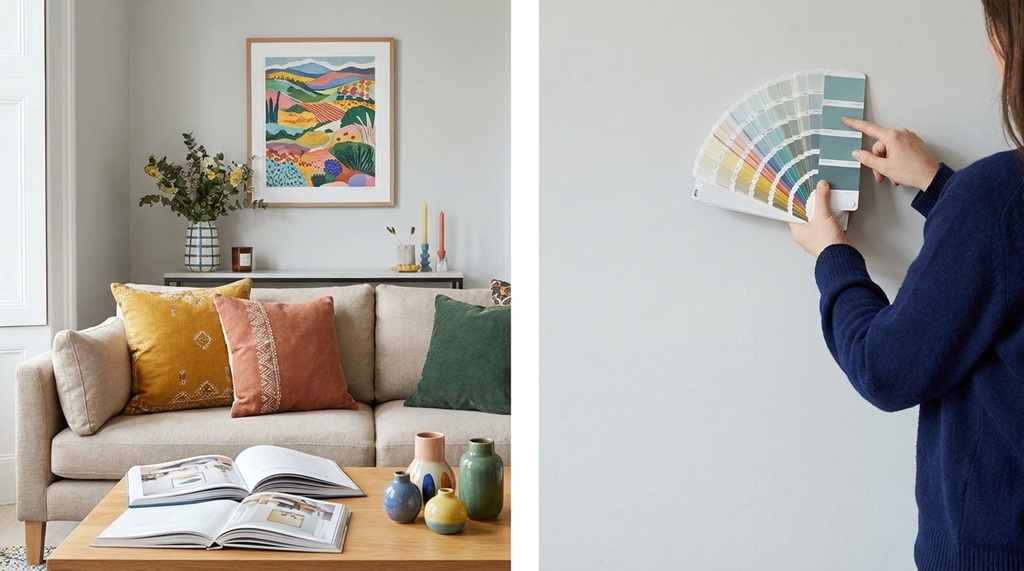
The safest way to add color to your home interior is to start with a neutral base, introduce color gradually through accessories and accents, and follow a structured palette like the 60–30–10 rule to maintain balance.
Many homeowners want a colorful home but hesitate because they fear choosing the wrong shades, creating visual clutter, or ending up with a space that feels overwhelming instead of stylish. This uncertainty often leads people to stay stuck with plain white or beige interiors that feel unfinished.
Adding color to your home interior means intentionally using tones, contrasts, textures, and accent elements to enhance mood, improve visual interest, and create a cohesive design without sacrificing comfort or harmony. When done correctly, color transforms small rooms into inviting spaces, highlights architectural features, and reflects personality.
The challenge is not choosing color—it’s choosing the right color in the right place. A poorly placed accent wall or mismatched palette can disrupt flow between rooms and make spaces feel smaller or chaotic. Fortunately, proven design principles make the process predictable and low-risk. This guide explains exactly how to introduce color confidently while avoiding the most common decorating mistakes.
Why is adding color important in home interior design?
Color influences mood, perception of space, and overall visual harmony, making it one of the most powerful tools in interior design.
Research published in environmental psychology studies shows color affects emotional response and productivity. Warm tones like terracotta and mustard encourage social interaction, while cooler shades such as sage green and soft blue promote calmness.
Color can also:
- Make small rooms appear larger
- Highlight focal points like artwork or furniture
- Create visual flow between spaces
- Improve natural light reflection
- Strengthen personal identity within interiors
Homes without intentional color layering often feel unfinished rather than minimal.
What is the 60–30–10 rule and how does it prevent color mistakes?
The 60–30–10 rule creates balance by assigning 60% of a room to a dominant color, 30% to a secondary color, and 10% to an accent shade.
This rule simplifies decision-making and prevents overuse of bold tones.
| Color Role | Percentage | Examples |
|---|---|---|
| Primary Color | 60% | Walls, flooring, large furniture |
| Secondary Color | 30% | Curtains, rugs, chairs |
| Accent Color | 10% | Pillows, lamps, artwork |
Professional interior designers frequently rely on this structure because it produces visually stable environments across different room sizes.
How do you choose the right color palette for your home?
The best color palette matches your lighting conditions, furniture tones, and lifestyle preferences rather than following trends.
Start by identifying existing fixed elements such as:
- Floor material
- Cabinet finishes
- Sofa fabric
- Wall orientation toward sunlight
North-facing rooms benefit from warmer tones like beige, peach, or soft clay. South-facing rooms work well with cooler shades like pale grey-blue or muted green.
Designers often recommend selecting one anchor color from a rug, artwork, or upholstery and building the palette around it.
Should you paint walls first or add colorful decor first?
It is safer to introduce color through decor first and commit to paint later once the palette feels cohesive.
Accessories are flexible and low-cost compared to repainting walls. Try:
- Throw pillows
- Artwork
- Area rugs
- Ceramic vases
- Lampshades
Once these elements work together, selecting a wall color becomes easier and more accurate.
What are the easiest ways to add color without repainting walls?
The easiest way to add color without repainting is to layer textiles, decorative accessories, and statement furniture.
Low-risk color additions include:
- Patterned cushions
- Accent chairs
- Curtains
- Wall art
- Indoor plants
- Decorative trays
Interior stylists frequently rely on these flexible elements because they can be replaced seasonally.
Which colors make small rooms look bigger and brighter?
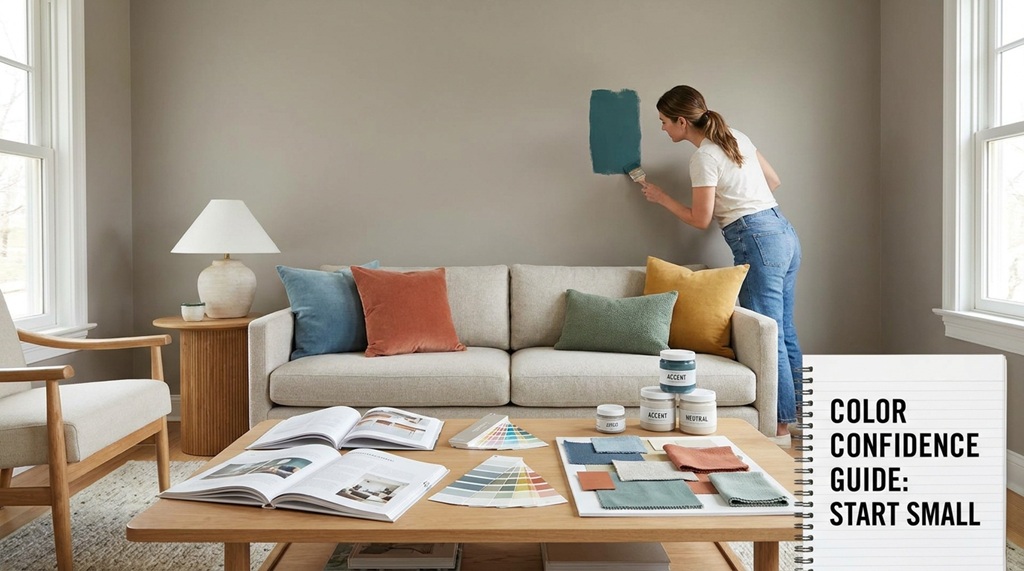
Light neutrals, soft blues, pale greens, and warm whites make small rooms appear larger by reflecting more light.
According to spatial perception research in residential design environments, lighter color palettes improve perceived openness by increasing surface reflectivity.
Recommended shades include:
- Soft ivory
- Light sage
- Pale sky blue
- Warm greige
- Muted sand tones
Avoid dark ceilings in compact spaces because they visually lower room height.
How do accent walls add color without overwhelming a space?
An accent wall introduces contrast while preserving balance across the rest of the room.
The most effective accent wall locations include:
- Behind the bed
- Behind the sofa
- Dining wall opposite entrance
- Fireplace wall
Designers recommend limiting accent walls to one per room to prevent fragmentation.
What colors work best for living rooms?
Living rooms benefit from warm neutrals, earthy tones, and layered accent shades that encourage relaxation and conversation.
Popular combinations include:
- Beige + olive green + brass
- Grey + navy + white
- Cream + terracotta + wood
These palettes support both natural light and artificial lighting conditions.
What colors are ideal for bedrooms?
Bedrooms work best with calming colors such as soft blues, muted greens, lavender tones, and warm neutrals.
Sleep research suggests cooler hues help reduce visual stimulation before rest.
Recommended bedroom accents:
- Upholstered headboards
- Layered bedding
- Soft rugs
- Wall sconces
How can kitchen interiors include color without reducing brightness?
Kitchens benefit from selective color placement on cabinets, backsplashes, or bar stools rather than full wall coverage.
Popular kitchen color accents include:
- Deep green cabinetry
- Matte black fixtures
- Terracotta tiles
- Mustard seating
Combining colored lower cabinets with white upper cabinets maintains brightness while adding personality.
Is it better to follow trends or choose timeless interior colors?
Timeless colors provide long-term flexibility, while trends work best as small accents.
Examples of timeless tones:
- Warm white
- Greige
- Sage green
- Navy blue
Trend colors like coral or bold purple are better suited for replaceable decor pieces.
How do lighting conditions affect interior color choices?
Lighting changes how colors appear throughout the day, so testing paint samples under natural and artificial light is essential.
Key lighting factors include:
- Window direction
- Bulb temperature
- Ceiling height
- Wall reflectivity
Warm lighting enhances earthy tones, while cool LED lighting strengthens blues and greys.
Can too many colors make a home look cluttered?
Yes, using too many unrelated colors creates visual noise and disrupts flow between rooms.
A cohesive palette usually includes:
- Two base neutrals
- One dominant color
- One accent tone
This structure keeps interiors visually connected.
How do professionals test colors before committing?
Professionals test colors using sample swatches on multiple walls and observe them at different times of day.
Recommended testing steps:
- Paint 60cm sample squares
- Check morning and evening appearance
- Compare against furniture
- View under artificial lighting
This prevents unexpected undertone conflicts.
Conclusion
Adding color to your home interior does not require bold risks or expensive redesigns. The most effective approach combines structured palette planning, gradual layering, and awareness of lighting conditions. Following principles like the 60–30–10 rule and testing shades before committing ensures harmony across rooms.
Small updates such as accent cushions, rugs, artwork, and statement chairs can transform spaces quickly without permanent changes. When color choices align with furniture, natural light, and room purpose, interiors feel intentional rather than experimental.
If your home currently feels plain or disconnected, start with one room and introduce a single accent tone. Build gradually. Consistency across spaces creates the strongest visual impact over time.
FAQ Section
What is the safest color to start with in home interiors?
Neutral shades like warm white, greige, or soft beige are the safest starting points because they work with most furniture styles and lighting conditions.
How many colors should be used in one room?
Most rooms look balanced with three main colors following the 60–30–10 distribution rule.
Can dark colors work in small rooms?
Yes, dark colors can work in small rooms when used on one accent wall or paired with light ceilings and reflective surfaces.
Should every room have the same color palette?
No, but rooms should share related undertones to maintain visual flow throughout the home.
What is the biggest mistake people make when adding color?
The most common mistake is choosing paint before considering furniture, flooring, and lighting conditions.
How do you match wall colors with furniture?
Select wall colors that repeat undertones already present in upholstery, rugs, or wood finishes for cohesive results.
Are accent walls still popular in modern interiors?
Yes, accent walls remain popular when used selectively behind focal areas like beds or sofas.
Read More Also: How to make mugs a meaningful gift
Find out: How to Create a Template for a Curved Surface


