Choosing a Builder for your Home Renovation

If you are planning to renovate your home or build an extension, you will be aware that there is a lot of planning involved in this, if you want to make sure that it is done correctly. One of the things that is extremely important when you are planning a home refurbishment is that the builder you choose is the right one for the job. Here are some of the things that you can do when it comes to choosing the right builder for you…

Image Credit

Speak to people who have had building work done recently – One of the best ways to find a builder that can carry out the work that you want to be done is to look at other building projects that are like yours that have been completed. Speak to the people who have had work done, and ask them what they like about it, or even what they don’t. This will give you a good idea of the builder that you are looking for.

Image Credit

Don’t just go for the cheapest – Something that many people do when they are searching for a builder, especially during these trying financial times, is to simply find someone who gives the cheapest quote. However, this may well not be the best idea, as you need to take into account the builder’s experience and also the quality of the materials used. In fact, going for a cheap builder could potentially cost you more in the long run, as it may mean that materials are inadequate. Although it is a good idea to factor price into it, it certainly shouldn’t be the only thing to consider when choosing a builder that is right for you.

Look online – The internet is a great tool that you can use to search for the right builder. Search for builders in your local area, such as builders Bristol like this for example www.mogfordprescott.co.uk/builders-bristol/ You can also use the internet to find reviews on local builders, where you will be able to ask questions and get a good idea of the type of work that they do. Social media is another way to get an idea of the builders in your area and is a good way to ask people directly for advice and recommendations.

What Does £1m Buy You in the London Housing Market?

It is well known that London is an expensive place to live. Everything costs more there, and that includes houses. Your £1m may not go as far here as it does in some parts of the country, but it is still a substantial amount. Exactly how far it will go is likely to change as the market continues to fluctuate and may also vary depending on where you are in the city. Regardless, there are several types of property that may be available to you.

Image Credit

It seems that 2021 was a good year for the London housing market There may have been seven electoral wards that lost their status as millionaire neighbourhoods, but there were 14 that joined the higher ranks. They include Childs Hill in Barnet, Chiswick Homefields in Hounslow and Earl’s Court in Kensington & Chelsea. As you may imagine, this includes a range of different properties.

Leafy suburbs

Areas like Childs Hill and others in Zone 3 tend towards larger houses, complete with their own gardens. These tend to be marketed and purchased as family homes. Properties with five or six bedrooms have become increasingly popular. Some areas technically outside of London, such Essex and Surrey, have also in many ways become suburbs of the city, with house prices to match. They are popular with commuters.

1960s estates

Conversely, a brutalist 1960s estate has also climbed high up in the market. Barbican flats, near the Barbican centre, were considered luxurious when they were first erected, but then saw a decline. Since 2001, however, they have quadrupled in price. Some of these flats do come with multiple bedrooms and bathrooms, as well as the advantage of a balcony. In recent years, former council flats in particularly desirable locations have surged in value, even when other council tenants still live nearby.

Image Credit

Studio flats

Of course, this being London, there are places where your £1million will not buy you more than a one-bed studio flat. There is likely to be minimal space in these kinds of properties. Areas where even the smallest flats are likely to come with a hefty price tag include Westminster and parts of Kensington & Chelsea, popular destinations for wealthy businessmen who travel regularly. Not all of them are tiny, and some do come with additional features, such as a concierge, as well as their own parking.

Of course, it is not just the property itself that creates value. It is also the location, both in terms of the area of London and local amenities from shops and restaurants to famous landmarks. The list of features that can impact a property’s price is a long and diverse one, so you need to know exactly what you want.

Finding the right sort of property that will work for your specific needs can be challenging. That is why a building survey in London, such as those conducted by Sam Conveyancing, can be so important. It allows you to rely on experienced experts with local knowledge to identify not just the properties in your price range but the different features that may make it appropriate or inappropriate for you.

London is a big city. The value of your £1million housing budget will change as you cross it, from one-bedroom studio flats in highly sought-after central areas to larger houses with family-friendly gardens as you move out into the more suburban corners. The market continues to fluctuate as well, with different properties increasing or decreasing in value by the year. This is just a brief snapshot of what may be available to you.

Making your Home as Safe as Houses

Your home is a place where you should feel safe and comfortable – but to make it this way, there are some things that you can do to help…

Burglaries – A burglary is not only something that can leave your home damaged, and your precious possessions gone, but it can also make you feel violated. The fact that someone has been into your home without you there, and then taken things from you can leave a scar on many people mentally.

Protecting your home from burglary is important, so here are a few things that you can do. Firstly, get an alarm system installed. Homes that have visible cameras and burglar alarms set up are a deterrent to burglars, who will want the job to be easy. Secondly, make sure that your locks are all working well, and use them, lock up even when you are in the garden, as it is not unheard of for a burglar to sneak in whilst you are out doing some gardening.

Image Credit

Fire – Fire is devastating in a home, and as well as the obvious risks to life, it can also damage your home and destroy precious and sentimental items that you have. The main thing to ensure that you have is a fire alarm, and also a carbon monoxide alarm. Sources of fires are numerous, so make sure you know what they are and have them checked. For example, having your boiler checked regularly by a professional like this boiler service Cheltenham based company www.combi-man.com as well as the electrical items in your home, will help to reduce the risk of fire dramatically.

Image Credit

The Weather – As the weather all around the world starts to feel the effects of climate change, things like flooding and storms are set to become more likely in the UK. Making sure that you are protected as well as you can be against these things is something that everyone should take seriously. Before winter arrives, reduce the risk of damage to your home by clearing out the drains and the gutters, as well as having any trees checked that are growing near to your home. You should also have a supply of sandbags ready for flooding and be aware of the sources to check for flood risks to your area.

Three Problems to Watch Out For With your Roof

The least likely time of the year that you are probably going to think about your roof or worry about any potential problems that you might have with it is the summer. As the weather is good, it is easy to think that it must all be fine. However, this is the time of the year when it is better than ever to think about your roof, and to get a professional like this roofing Cheltenham based company stromroofingltd to come and check it out.

This is because during the summer there could well be hidden problems lurking in your roof, which might be something that you discover too late once winter arrives – here are some of the things that could be a problem…

Sunlight – In a summer like the one we have just had; the roof is likely to have had a lot of sunlight on it. This is not usually a problem, but it could mean that the intense heat for such a prolonged period of time could cause the shingles on the roof to become dry and cracked. This then means that they are not only not able to do their job properly but are at risk of falling off the roof completely.

Image Credit

Moss – A little moss on a roof isn’t a problem, but if you have a lot of moss growing on it, it may be time to take action. Moss can work its way into cracks and cause damage to the structure of the roof. This can then let dampness become a huge problem inside your home, especially during the winter. North facing roofs are more at risk of this happening, however, if you do notice moss growing on your roof it is always a good idea to get it checked out.

Image Credit

Damp – Heat from the sun and then the nights that are getting cooler, creates the perfect conditions for moisture to build on the roof. This can then potentially enter through cracks, and get into your home, not only causing problems with damp but also rotting parts of the structure of the roof. Ventilation is important in your roof and needs to be regularly checked to ensure that this is not happening.

The Four Types of Central Heating in the UK

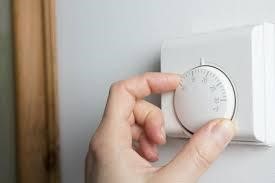
The vast majority of homes in the UK are kept warm by a central heating system. In the winter in particular, this is an essential way of keeping the house warm and cosy, and because summers here are so unpredictable, they can also be very useful during the summer months! As well as providing heat, it also provides us with hot water all year round.

Image Credit

There are actually four different types of central heating system that are used in the UK – these are:

Storage Heating – These types of heaters store up heat inside them overnight using electricity when it is not a peak time. For this reason, they are often seen as being the most economical form of heating, although it can take some getting used to if you haven’t used them before!

Warm Air – These are typically found in older homes that were built in the 1960s. Cold air from the outdoors is brought into the system, which a boiler then heats. The air is then spread around the home through vents rather than radiators, and these can then be closed or opened to control how much heat is pumped out of them. They work in a similar way to air conditioning systems.

Wet Central Heating – This is by far the most common form of central heating used in the UK. The boiler heats up water inside it, which then gets pumped throughout the house in pipes, which then connect to radiators in various rooms of the home. The radiators can be controlled by the taps on the sides of them to turn them on or off, as well as to determine the amount of warmth they provide, and this heating system also warms up water for the taps.

Image Credit

District Heating – This type of heating is not very common in the UK. It basically is used to heat several homes from one central point. The heat is then distributed amongst this one network via various pipes. It is something that is likely to become more popular going forward, as the carbon emissions on this type of heating are lower.

Whatever type of heating you have in your home, having it regularly checked by a professional like this boiler servicing Cheltenham based company https://www.blu-fish.co.uk/gas-heating-services-cheltenham/boiler-repair-cheltenham is essential if you want it to last you for years.

What Does A Plumber Do?

A plumber does a variety of jobs, including installing pipes and drains, troubleshooting plumbing systems, and repairing worn or damaged parts. Some plumbers install new pipes, cut holes in walls, or hang steel supports from ceiling joints. Others are called on to unclog pipes and maintain septic systems. A plumber may also be called upon to install a new water heater, sink, or dishwasher. In many cases, a plumber’s work is more complex than simply replacing a tap or unclogging a drain. It might involve technology such as a CCTV Drain Survey Windsor. Find out more at https://www.drainpower.co.uk/drainage-services/cctv-drain-surveys/cctv-drain-surveys-windsor/

Image credit

A plumber must be able to analyse a problem to determine its cause and recommend an effective solution. Plumbing jobs can be challenging and require a wide range of skills, from interpreting blueprints to troubleshooting. Plumbers may also have to write reports, track expenses, and organise inventory. If you are looking for a career in plumbing, start by looking at apprenticeships or college courses.

Commercial plumbing jobs can be very different from those in residential settings. Commercial plumbers tend to work with larger systems in public buildings. They may work with a multitude of outlets, including multiple floors, and are responsible for installing water systems, sewers, and other infrastructure. Their work can also be very extensive, involving the installation of drinking fountains, water sprinklers, and even waste removal systems. But even more than homes, commercial plumbing requires plumbing technicians to work on large scale projects.

To become a plumber, you must have a high level of physical fitness, excellent motor skills, and an ability to problem solve. You must also have the ability to work in confined spaces and lift heavy tools and equipment. Job prospects for plumbers are good with predicted job growth continuing.

Image credit

The typical plumber’s workday lasts between eight and ten hours. Their workweek can be flexible, with many self-employed or working part-time. Many plumbers work night shifts, but this is not mandatory. Some also provide 24 hour emergency call out services.

From small jobs to major commercial projects, plumbers have a wide range of skills, and take pride in determining problems and solving them. While their hands might be messy, the end result is an impressive hero badge in the eyes of customers.

In the long run, you can look forward to a satisfying and rewarding career as a plumber. You can even become a leader in your field and set your own hours.


Roof Care Tips

Looking after your roof is important at any time of year but especially in the winter. As well as keeping us safe from the elements at this time of the year, a roof can also help to save energy when used with things like a gas meter box like this www.meterbox.co.uk/gas-meter-boxes and energy saving light bulbs. Here are some tips of roof care to keep your property is excellent order:

Be Observant

Ideally, you’ll want to inspect your roof twice a year from both the inside and out. You don’t need to climb a ladder to do this, a pair of binoculars will work just as well.  Get up into the loft and take a good look around with a torch. If you spot any daylight streaking through, then you might have missing tiles. Replace as soon as possible to prevent any rain coming in and causing damage. If in doubt, call in the services of a professional roofer.

Image credit

Retiling

If you do need to replace missing tiles, you have a choice of handcrafted or machine -made tiles. Handcrafted will usually be more expensive, so if you have a smaller budget, choose the concrete or clay tiles which are more affordable. Clay is longer lasting than concrete and looks a little better.

Flat Roofs

These roofs are more likely to experience leaks due to not having a gradient. Rainwater can pool, causing sagging and eventual flooding into the rooms below. If you’re building an extension, a pitched roof will be easier to maintain in the long run and is generally more aesthetically pleasing.

Clean your gutters regularly to remove any debris or leaves that have built-up.

This ensures that water won’t pool and overflow back into the roofing system. If your guttering system is old, it might be time to think about replacing it.

Image credit

5.Maintain any branches from nearby trees and keep bushes trimmed so they are not coming into contact with your roof. You don’t want them falling onto or hitting your roof, possibly causing damage.

If you notice a build-up of excess moss or algae, you’ll want to get a professional to come and clean your roof. Moss can trap moisture which will cause long-term damage to your roof.

If you or a professional is on your roof installing a new satellite dish or vent for example, get them to check that all is as it should be. Downspouts from upper floors should not be emptying onto the roof but directly to the guttering and down to the ground. This is important so as not to be causing long-term damage to your roofing materials.

Is your boiler becoming a nuisance?

We just get used to things working the way they should, pushing the course of our everyday lives. We don’t think much about the engineering behind the scenes that takes place every day to give us our food, hot water and electricity. If it goes wrong, however, our lives are suddenly plunged into turmoil, uncertainty, and misery! And you know that when your boiler breaks down, it’s going to be in the middle of winter, when it’s the hardest thing to do when you need it the most. Here are some typical issues that can happen:

Image Credit

Leaking-it may be triggered by a variety of problems if you find a leak coming from your boiler. A damaged or broken internal component, such as a pump seal or valve, would usually be the cause. Most likely, a pump seal leak would just require a new seal and a pressure leak may mean that the pressure of your boiler is too high. Never try to repair a leaky boiler on your own, as you would need a licenced engineer with a Gas Safe accreditation like Boilers Gloucester based company www.hprservicesltd.com/gloucester-boilers/boiler-service-gloucester/

Image Credit

Pilot light problems – This may be the result of a draught blowing it out or a build-up of dirty light deposits or a defective thermocouple cutting off the gas supply. If the Pilot light does not operate, check other gas appliances to see if they are working, and if not, if there is a supply issue, check with your gas supplier. If this is not the problem, then you will need a competent gas engineer’s advice. Never try yourself to carry out work on the boiler.