
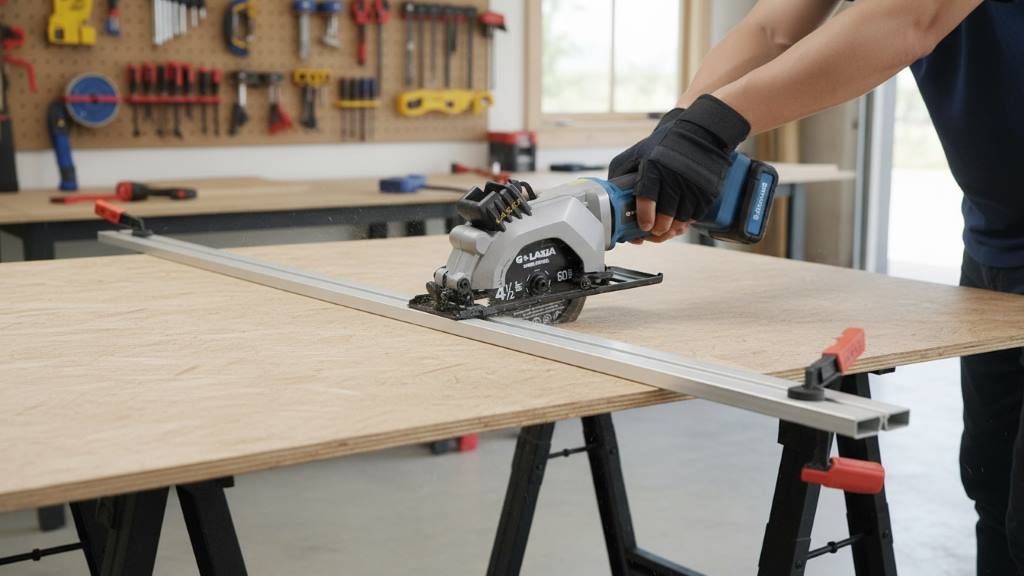

A circular saw can turn intimidating weekend projects into clean, confident cuts—if you choose a model that fits your space, your materials, and your skill level. This guide breaks down what actually matters for home use and highlights the G LAXIA Mini Circular Saw as a compact, beginner-friendly option worth considering.
If you’re shopping for cutting tools for beginners because you want straighter cuts without hauling bulky gear, you’ll find practical, real-world selection tips and safe-use guidance below.
Why a circular saw belongs at home
A circular saw earns its place because it handles the cuts most DIY projects demand: trimming plywood, ripping shelves, breaking down studs, and squaring up boards. Unlike specialty saws, it adapts to many jobs just by changing the blade type and adjusting depth and bevel.
For many homeowners, it also solves a common pain point: making long, straight cuts without relying on a shop full of tools. With the right blade and a simple straightedge guide, a “good enough” cut becomes a “looks professional” cut.
A circular saw also pairs well with small workspaces. Even if you only have a garage corner or a balcony workbench, a compact household saw can still handle repairs, furniture flips, and basic remodeling—especially if you prioritize dust control and safe setup.
What “best for home use” really means
Home use does not mean “weak” or “cheap.” It means the saw must feel controllable, store easily, and deliver accurate cuts with minimal setup. Based on manufacturer-style specs and widely accepted industry standards, these factors matter most.
Blade size: 7-1/4 inch vs 6-1/2 inch vs mini
- 7-1/4-inch saws: The do-it-all size for dimensional lumber and sheet goods; they typically cut deeper and accept the widest blade selection.
- 6-1/2-inch saws: Lighter and easier to handle, with solid capacity for most DIY work (especially plywood and 2x stock).
- Mini circular saws (around 4-1/2 inch): Best for thin stock, tight spaces, quick trim work, and reducing fatigue—great when a full-size saw feels like overkill.
If most projects involve shelving, flooring underlayment, paneling, and small boards, a mini model can feel dramatically easier to control than a full-size saw.
Cutting depth and bevel range
Two numbers determine whether a saw fits your common tasks:
- Depth at 90° (straight cut): dictates what thickness you can cut in one pass.
- Depth at 45° (bevel cut): matters for miters, picture frames, and angled trim.
Many mini saws list maximum depth around 1-11/16 in at 90° and 1-1/8 in at 45°, which sets realistic expectations for what they can and cannot do in one pass. (Those figures appear in mini saw spec sheets and manuals for this class of tool.)
Corded vs cordless: what home users should choose
Both work; the “best” choice depends on where you cut.
- Corded: consistent power, no battery management, often lower cost; ideal if you work near outlets.
- Cordless: freedom to cut outside, in the driveway, or across the yard; ideal if extension cords annoy you or you remodel rooms often.
For many homes, cordless becomes the preferred option simply because it reduces friction: fewer setup steps means more projects actually get done.
Safety and control features that matter more than raw power
According to widely accepted industry safety standards, control prevents accidents more reliably than horsepower alone. Prioritize:
- A smooth lower blade guard that retracts and returns easily.
- A clear, stable base/shoe that stays flat on the material.
- A comfortable grip that keeps wrists neutral.
- An electric brake (if available) to stop the blade sooner after the trigger release.
- A lock-off or dual-action trigger to reduce accidental starts (commonly included on compact models).
Best circular saw types for common home projects
Rather than chasing a single “best” model, match the saw category to your projects. This approach aligns with how professionals build toolkits: they buy for outcomes, not hype.
Compact mini circular saws (best for tight spaces)
Choose this style if you:
- Cut thinner boards, plywood, laminate, and small trim pieces.
- Work indoors and want a lighter tool.
- Want a saw that feels less intimidating.
Mini saws often include accessories like a laser guide or rip guide, which can help beginners track straighter lines (as long as you still measure and mark correctly).
6-1/2 inch cordless saws (best all-around for DIY)
Choose this style if you:
- Build shelves, simple furniture, and outdoor projects.
- Cut 2x lumber occasionally but not all day.
- Want better capacity without the weight of a 7-1/4-inch saw.
7-1/4 inch saws (best for heavy-duty home renovation)
Choose this style if you:
- Remodel regularly.
- Cut a lot of framing lumber.
- Want the most blade options and maximum versatility.
For many homeowners, this size becomes the “primary” saw, while a smaller saw becomes the “grab-and-go” option.
Spotlight: G LAXIA Mini Circular Saw (why it’s a strong home pick)
The G LAXIA Mini Circular Saw stands out as a compact tool designed around control and convenience, which matters most in DIY settings where users value comfort and quick setup. Product listings and spec-style descriptions for this saw describe it as a 4-1/2-inch mini circular saw with speed around 3400 RPM, and they commonly highlight features like a laser guide and rip guide for line tracking.
Many descriptions also mention a max cutting depth around 1-11/16 in at 90° and 1-1/8 in at 45°, which makes it a practical choice for sheet goods, thin boards, and many household materials—but it also signals clear limits for thick framing cuts.
This is where it shines at home:
- Fast interior cuts: trimming paneling, cutting backing boards, shortening shelves.
- Light-duty remodeling: underlayment, laminate-type materials (with the correct blade), and small repairs.
- Reduced fatigue: a smaller tool often feels safer because it stays stable with less effort.
Where a mini saw is not the best choice
Based on manufacturer-style cutting depth constraints typical of 4-1/2-inch mini saws, avoid expecting a mini saw to replace a full-size framing saw for:
- Repeated cutting of thick 2x lumber in one pass.
- Big deck-building jobs where speed and capacity matter.
- Heavy ripping in thick hardwood.
A smart home setup often uses a mini saw for quick jobs and a bigger saw for occasional heavy work.
How to choose the right circular saw (quick checklist)
Use this decision filter before buying. It keeps the selection practical and prevents overspending.
Step 1: Identify what you cut most
- Mostly plywood and boards under 1 inch → mini or 6-1/2-inch saw
- Mix of plywood and 2x lumber → 6-1/2-inch cordless or 7-1/4-inch
- Lots of framing and outdoor builds → 7-1/4-inch (corded or higher-voltage cordless)
Step 2: Match blade and material
As recommended by professionals, match blade tooth count and design to the material:
- Fewer teeth: faster rough cuts in construction lumber
- More teeth: cleaner cuts in plywood and finish materials
- Specialty blades: for metal, fiber cement, or laminate (only when the saw allows it)
Step 3: Prioritize dust management for indoor work
If you cut inside, choose a saw with:
- A dust port or dust extraction option
- A blower or design that clears the cut line
Industry safety guidance also emphasizes controlling dust exposure, especially with engineered wood products.
Step 4: Don’t ignore ergonomics
A saw that feels “slightly too big” in the store will feel much bigger after ten cuts. For many DIYers, comfort drives accuracy more than spec sheets do.
Related:
Quick Cuts Made Easy: 5-1/2 Inch Saws for Precision Woodworking
Gingerbread Trim for Porches: Add Charm to Your Home
Circular saw safety basics (homeowner-friendly)
Circular saws demand respect. Industry safety checklists repeatedly emphasize personal protective equipment, stable work support, and correct saw setup.
Before you cut
- Wear eye protection and hearing protection.
- Use a dust mask when cutting materials that generate fine dust.
- Inspect the blade guard to ensure it moves freely.
- Check the blade for sharpness and damage.
- Set cutting depth so the blade extends only slightly below the material (common safety guidance recommends keeping blade exposure minimal).
During the cut
- Clamp the workpiece whenever possible.
- Keep the cord (if corded) out of the cut path.
- Start the saw before contacting the material and let it reach full speed.
- Keep hands away from the line of cut and never reach under the workpiece.
- Maintain a balanced stance and avoid awkward positions.
After the cut
- Release the trigger and wait for the blade to stop fully before setting the saw down.
- Unplug/remove battery before changing blades or making adjustments.
Practical tips for cleaner, straighter cuts at home
These methods improve results immediately—even with a budget saw.
Use a straightedge guide (the simplest “upgrade”)
- Measure and mark your cut line.
- Clamp a straight board or level as a guide.
- Run the saw base against it for a straight cut.
This technique often beats relying on a laser alone, especially if the material shifts.
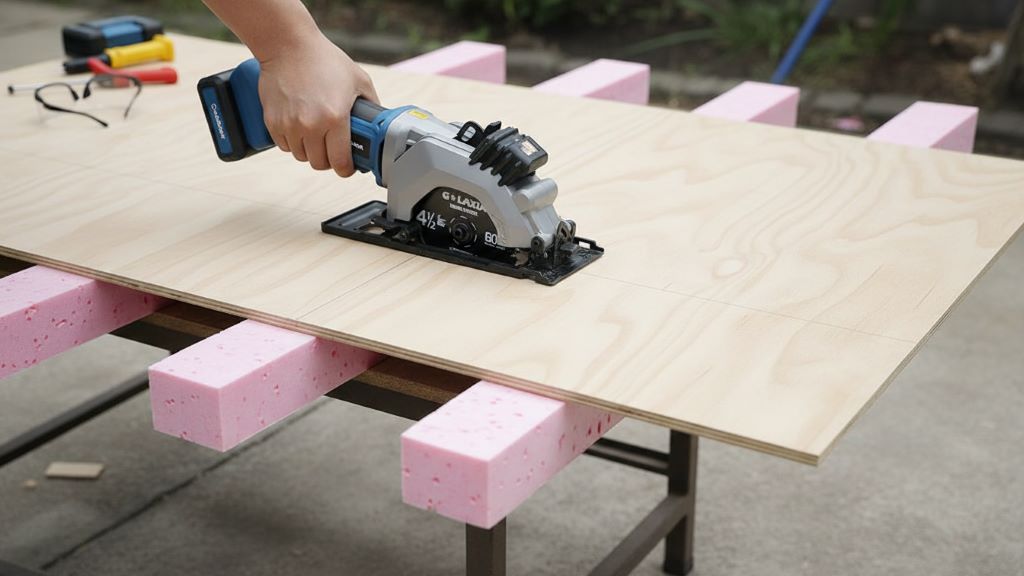
Support sheet goods correctly
For plywood:
- Support both sides of the cut to prevent binding.
- Keep the “drop” piece from tearing out at the end.
A few foam insulation boards on the floor can work as an inexpensive cutting platform for full sheets.
Prevent tear-out on plywood
- Use a fine-tooth blade for crosscuts.
- Score the cut line with a utility knife for extra clean edges.
- Place painter’s tape along the cut line (helps on splinter-prone surfaces).
Maintenance and blade care (so the saw stays accurate)
Based on manufacturer guidelines commonly found in saw manuals, most “my saw cuts crooked” complaints come from blade and base issues—not the motor.
- Replace or sharpen blades when cuts start burning, splintering, or wandering.
- Keep the base plate clean so it slides smoothly.
- Periodically check bevel and depth locks for tight, repeatable settings.
- Store the saw so the base and guards don’t get bent.
FAQ: Best circular saws for home use
What blade size works best for a typical homeowner?
A 6-1/2-inch or 7-1/4-inch saw covers most DIY tasks, while a 4-1/2-inch mini saw excels for lighter work and tight spaces.
Can a mini circular saw replace a regular circular saw?
A mini saw can cover many indoor and light-duty jobs, but it usually cannot match the depth and speed needed for frequent framing cuts.
Should a beginner buy corded or cordless?
Cordless reduces setup hassle and works anywhere, while corded offers consistent power without battery management; the best choice depends on where cutting happens most.
What is the safest way to cut plywood at home?
Clamp the sheet or support it on a stable surface, keep blade depth shallow, stand balanced, and keep hands away from the cut line; use eye and hearing protection.
Do laser guides guarantee straight cuts?
No. A laser can help with alignment, but clamping a straightedge guide typically produces more reliable straight cuts.
What is the most common mistake beginners make?
Beginners often support material poorly, which causes binding and kickback risk; proper support and clamping prevent many problems.
How often should blades be replaced?
Replace blades when cuts burn, splinter, slow down, or drift—frequency depends on material type and how often the saw gets used.
Conclusion
The best circular saw for home use is the one that matches your most common materials, feels stable in your hands, and helps you cut safely in your available space. Start with your project list, choose the right saw size, and treat blade selection and setup as part of the tool—because they determine results as much as the motor does.
If you want a lighter, easier-to-handle option for everyday DIY cuts, consider adding a compact mini saw to your home toolkit and practice on scrap material before moving to your “real” workpiece.
References:


 0
0
 0
0




Average Rating