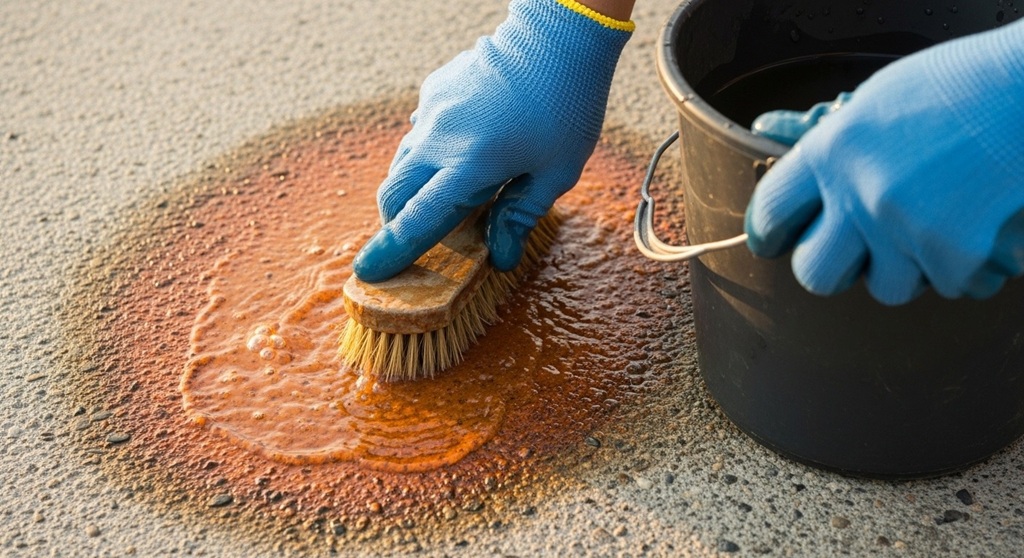
Rust stains on concrete often appear suddenly. A metal chair left on a patio, a leaking water pipe, or fertilizer runoff can leave orange-brown marks that seem permanent. Many homeowners assume strong chemical cleaners are required to fix the problem. In reality, several effective methods can remove rust stains from concrete using common household items and natural ingredients.
So, how do you remove rust stains from concrete without chemicals? The most reliable approach is using natural acids such as lemon juice, vinegar, baking soda, or salt combined with scrubbing and proper rinsing. These mild solutions break down iron oxide (rust) without damaging concrete surfaces or harming nearby plants and soil.
Concrete is porous. That means rust particles can settle deep into the surface if left untreated. Acting early improves results. However, even older stains can be reduced significantly using mechanical scrubbing and natural acidic reactions.
This guide explains step-by-step methods to remove rust stains from concrete patios, driveways, sidewalks, garage floors, and outdoor slabs. Each section answers common search questions and provides practical steps you can follow immediately.
By the end, you will know exactly how to clean rust stains safely, when to repeat treatments, and how to prevent the problem from returning.
Why Do Rust Stains Form on Concrete?
Short answer: Rust stains form when metal objects or iron particles react with moisture and oxygen, producing iron oxide that seeps into porous concrete.
Rust occurs through a chemical reaction called oxidation. When iron or steel is exposed to oxygen and water, iron oxide forms. This material has a reddish-brown color and easily transfers to porous surfaces like concrete.
Common Causes of Rust Stains on Concrete
- Metal patio furniture sitting on a wet surface
- Fertilizers containing iron compounds
- Well water with high iron content
- Leaking pipes or irrigation systems
- Metal tools or grills left outdoors
- Steel reinforcement within concrete exposed to moisture
Concrete absorbs water easily. When rust particles enter the pores, they bond to the surface. This is why simple rinsing rarely removes the stain completely.
According to building maintenance studies from the Portland Cement Association, concrete can absorb up to 10–15% of its weight in water. This porosity explains why rust stains spread quickly if not cleaned early.
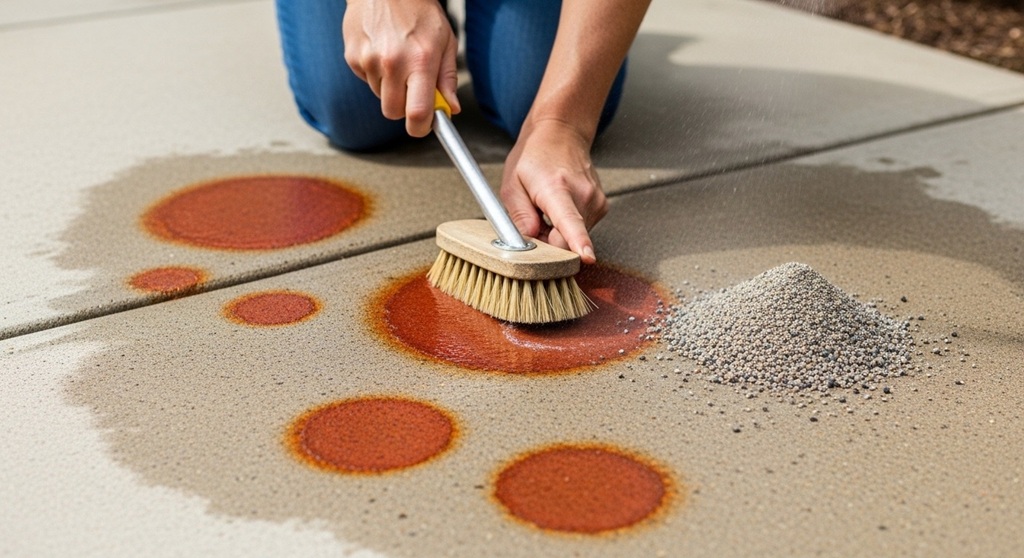
How to Remove Rust Stains from Concrete Using Lemon Juice and Salt?
Quick answer: Sprinkle salt on the stain, pour lemon juice over it, let it sit for 10–15 minutes, scrub with a stiff brush, and rinse thoroughly.
Lemon juice contains citric acid. Citric acid reacts with iron oxide and helps loosen rust particles embedded in concrete pores. Salt adds mild abrasion, improving the cleaning effect.
Step-by-Step Process
- Clean loose dirt from the concrete surface.
- Sprinkle a thick layer of table salt over the rust stain.
- Pour fresh lemon juice directly onto the salt.
- Let the mixture sit for 10–15 minutes.
- Scrub the area using a stiff nylon or deck brush.
- Rinse with clean water.
Why This Method Works
- Citric acid dissolves iron oxide bonds.
- Salt creates friction that lifts particles from pores.
- Scrubbing increases surface contact.
This method works best on light to moderate rust stains found on patios, garden walkways, and concrete steps.
Can Vinegar Remove Rust Stains from Concrete Naturally?
Short answer: Yes. White vinegar contains acetic acid, which dissolves rust particles and loosens stains from concrete surfaces.
White vinegar is one of the most widely recommended natural cleaners for rust removal. Acetic acid reacts with iron oxide and breaks it down, making it easier to scrub away.
How to Use Vinegar on Concrete Rust Stains
- Pour undiluted white vinegar directly onto the stain.
- Allow the vinegar to sit for 15–20 minutes.
- Scrub using a stiff-bristle brush.
- Rinse thoroughly with water.
Pro Tip
For stubborn stains, warm the vinegar slightly before applying it. Warm liquids improve the reaction speed between acetic acid and rust.
This method works well for driveway rust marks caused by tools, bicycles, or grills.
Does Baking Soda Help Remove Rust Stains from Concrete?
Quick answer: Baking soda works as a mild abrasive that helps scrub rust stains when combined with water or vinegar.
Baking soda is alkaline. While it does not chemically dissolve rust like acids do, it provides gentle abrasion that lifts stains from porous concrete surfaces.
Steps for Baking Soda Rust Removal
- Mix baking soda with water to create a thick paste.
- Apply the paste directly onto the rust stain.
- Let it sit for 10 minutes.
- Scrub using a brush or sponge.
- Rinse with water.
When to Use Baking Soda
- For light rust stains
- When you want a non-acid method
- For indoor concrete floors
Many homeowners combine baking soda with vinegar for stronger cleaning action.
What Is the Best Natural Rust Remover for Concrete?
Short answer: Lemon juice and vinegar are generally the most effective natural rust removers for concrete due to their acidic properties.
| Method |
Key Ingredient |
Best For |
Strength |
| Lemon + Salt |
Citric Acid |
Patios and steps |
Medium |
| White Vinegar |
Acetic Acid |
Driveways and sidewalks |
Medium |
| Baking Soda Paste |
Mild Abrasive |
Light stains |
Low |
| Scrubbing with Hot Water |
Heat + friction |
Fresh rust marks |
Low |
These natural solutions are widely recommended because they are affordable, environmentally friendly, and safe for most outdoor surfaces.
Can Pressure Washing Remove Rust Stains from Concrete?
Short answer: Pressure washing can help remove loose rust particles but usually does not eliminate deep stains by itself.
Pressure washers use high-pressure water jets that clean surface contaminants effectively. However, rust embedded deep within concrete pores may remain visible.
Best Practice
- Apply vinegar or lemon solution first.
- Allow it to break down rust deposits.
- Then use pressure washing to remove residue.
This combined method is often used by professional concrete cleaning services.
Industry cleaning reports show pressure washing alone removes around 40–50% of surface rust discoloration, while acid-assisted cleaning can increase removal effectiveness significantly.
How Long Does It Take to Remove Rust Stains from Concrete?
Short answer: Most rust stains can be reduced within 20–40 minutes using natural cleaning methods.
However, the total time depends on several factors:
- Age of the stain
- Depth of penetration
- Concrete porosity
- Cleaning method used
Fresh stains usually disappear after one treatment. Older stains may require multiple cleaning cycles.
How to Prevent Rust Stains from Returning on Concrete?
Short answer: Prevent rust stains by sealing concrete, removing metal objects, and controlling moisture exposure.
Prevention Tips
- Use outdoor furniture pads.
- Seal concrete surfaces annually.
- Store metal tools away from patios.
- Fix leaking irrigation systems.
- Rinse fertilizer spills immediately.
Concrete sealers reduce water absorption and block rust particles from penetrating the surface.
According to construction maintenance research, sealing concrete can reduce moisture penetration by up to 90%.
Conclusion: What Is the Safest Way to Remove Rust Stains from Concrete?
Rust stains on concrete may look permanent, but they rarely are. In most cases, simple natural ingredients already in your kitchen can remove them effectively. Lemon juice, vinegar, salt, and baking soda provide gentle yet effective ways to break down rust without using harsh chemical cleaners.
Start with the mildest method first. Lemon and salt often remove fresh stains quickly. Vinegar works well for deeper discoloration. For stubborn stains, repeat the process or combine natural acids with mechanical scrubbing or pressure washing.
Prevention also matters. Removing metal objects, cleaning spills quickly, and sealing concrete surfaces can stop rust stains before they begin.
If your driveway, patio, or walkway currently has rust marks, try one of these natural methods today. A few minutes of cleaning can restore the appearance of your concrete without spending money on commercial cleaners.
Ready to improve your outdoor surfaces? Start with these simple techniques and keep your concrete looking clean and well maintained year-round.
FAQs: Removing Rust Stains from Concrete
1. What is the fastest way to remove rust stains from concrete?
The fastest method is pouring white vinegar onto the rust stain, letting it sit for 15 minutes, scrubbing with a stiff brush, and rinsing with water.
2. Can rust stains permanently damage concrete?
Rust stains usually do not damage concrete structurally. However, they can penetrate pores deeply and become harder to remove if left untreated for long periods.
3. Does lemon juice really remove rust from concrete?
Yes. Lemon juice contains citric acid, which reacts with iron oxide and helps break down rust stains on porous surfaces like concrete.
4. Can baking soda remove rust stains from driveways?
Baking soda can remove light rust stains when used as a paste and scrubbed thoroughly. However, stronger acids such as vinegar may be required for deeper stains.
5. Will rust stains return after cleaning?
Rust stains can return if the source remains. Removing metal objects and sealing concrete surfaces helps prevent recurring stains.
6. Is pressure washing safe for rust removal?
Yes. Pressure washing is safe for most outdoor concrete surfaces, especially when used after applying natural rust removal solutions.
7. How often should concrete be sealed to prevent rust stains?
Most concrete sealers last between 2 and 3 years. Reapplying sealer regularly reduces moisture absorption and prevents rust penetration.
Read More Also: Gingerbread Trim for Porches: Add Charm to Your Home
Find out: How to Enclose a Porch? Follow These Instructions