You have been burned before. You dropped serious cash on a shiny new grill, only to discover it rusts after two seasons, cooks like a convection oven with no sear, or is too small for even a modest Labor Day cookout. These common outdoor BBQ grills mistakes turn the dream of backyard feasts into a dusty, regretful corner on the patio. The problem is that most guides focus on features, not on fit. This article will help you diagnose exactly what you actually need before you fall into the same trap, saving you time, money, and a lot of incinerated chicken.
What Is the Most Common Mistake People Make When Buying a Grill?
The single most frequent error is buying a grill based on physical size alone without considering the usable cooking area. A massive four-foot-wide lid often hides an interior that is cramped by large burners or awkward rack placement.
When you see a big grill at a big-box store, it is easy to assume it will feed a crowd. In reality, you need to measure the primary cooking grate, not the total square inches which includes warming racks. For example, a grill claiming 800 square inches might only offer 450 usable on the main grate. If you plan to cook for more than six people regularly, you need at least 500 square inches of primary space. Always disregard the “total” number and ask for the primary cooking area measurement.
How to Spot the “Marketing Math” Trap
- Check the primary grate: Look for the actual length and width of the main cooking surface.
- Ignore the warming rack: It is rarely useful for actual grilling and is only for keeping buns warm.
- Consider the burner layout: If the burners are spaced too far apart, you will have cold zones that make even cooking impossible.
Why Do So Many Grills Rust Within a Few Years?
Most grills rust early because manufacturers use thin-gauge steel or low-quality paint that cannot withstand consistent moisture and heat cycling. The protective coating fails, and oxidation begins immediately.
The material choice is the primary determinant of longevity. Stainless steel is the gold standard, but not all stainless steel is equal. Look for 304-grade stainless steel for the body, lid, and burners. This grade contains more chromium and nickel, which resists rust and heat warping dramatically better than 430-grade steel. If the price seems too good to be true, the manufacturer probably used painted cold-rolled steel which will flake and rust within three years. To avoid making these outdoor BBQ grills mistakes, always check the material specification card that comes with the grill. If the grade is not listed, assume it is low quality. For excellent options that avoid these pitfalls, check out this guide on outdoor BBQ grills mistakes to see which models hold up over time.
Quick Material Comparison Table
| Material | Durability | Rust Resistance | Price Range |
|---|---|---|---|
| 304 Stainless Steel | Excellent | High | $$$ |
| 430 Stainless Steel | Good | Medium | $$ |
| Porcelain-Coated Cast Iron | Very Good (if coating intact) | Medium | $$$ |
| Painted Cold-Rolled Steel | Poor | Low | $ |
How Can You Tell If a Grill Will Cook Evenly?
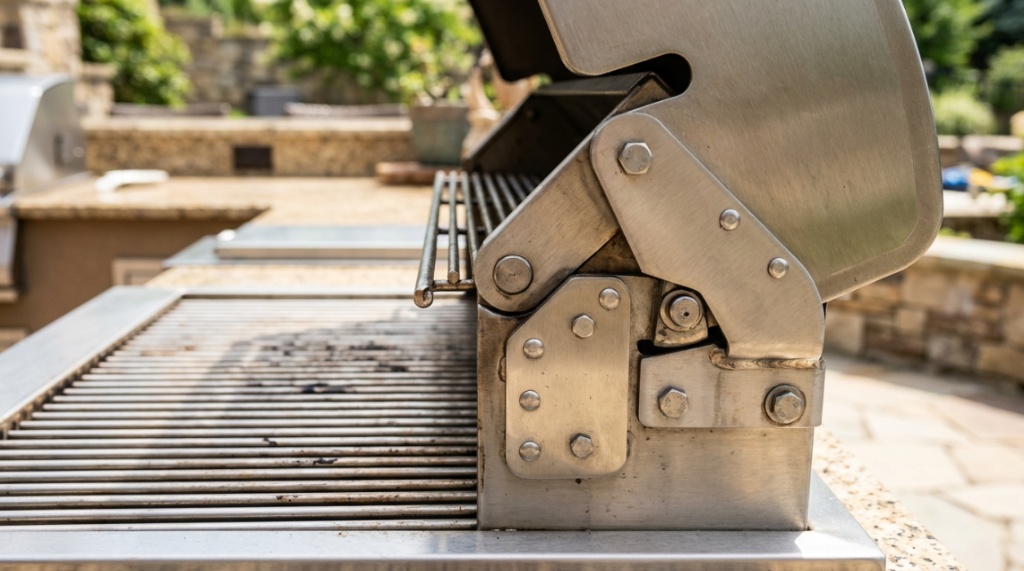
You can assess even heating by examining the burner design and the heat distribution system. A single “U” or “H” shaped burner provides far more even heat than multiple straight burners running front to back.
Straight burners often create hot spots directly over each burner and cold valleys between them. Look for a grill that uses a heat plate or flavorizer bar system that covers the burners evenly. These bars vaporize drippings for flavor while distributing heat across the entire cooking surface. Another practical test is to read independent reviews that specifically mention temperature variance across the grate. A good grill will have no more than a 25-degree difference from left to right. If you cannot find data, check the manufacturer’s warranty on the burners. A 10-year warranty suggests confidence in even heat design.
Which Grill Type Is Best for a Beginner?
A gas grill is the best choice for a beginner because it offers instant ignition, precise temperature control via knobs, and requires no skill to manage fuel or airflow compared to charcoal or pellet grills.
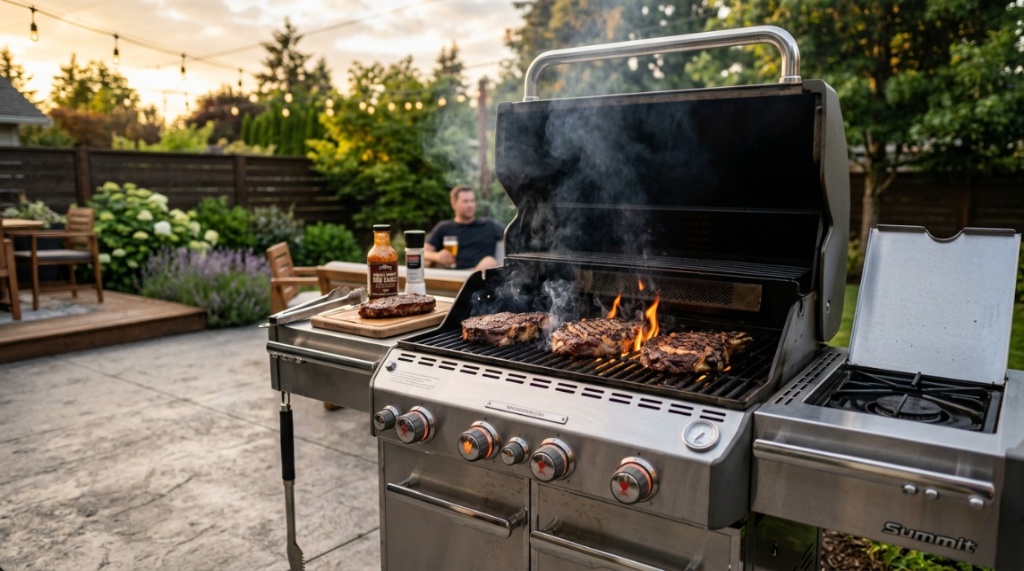
Starting with a gas grill removes the learning curve associated with charcoal chimney starters, ash cleanup, and airflow management. You simply turn a knob and wait five minutes. Look for a three-burner model with a side burner. This gives you enough space to cook for four to eight people and a side burner for sauces or sides without going inside. Beginner mistakes often involve buying too many features (like a rotisserie or sear station) that add cost but are rarely used. Keep it simple. Focus on a solid frame, good warranty, and easy cleaning access.
When Should You Choose Charcoal Over Gas?
You should choose charcoal over gas only when you prioritize intense smoky flavor and high heat searing over convenience and speed. Charcoal grills burn at a higher temperature (700-900°F) which creates a superior crust on steaks.
If you are a “flavor first” cook who enjoys the ritual of lighting coals and tending a fire, charcoal is your tool. It excels for low-and-slow smoking of ribs or brisket, as well as ultra-hot searing of steaks. The trade-off is time: you need 20-30 minutes just to get the coals ready, and temperature control is much harder than turning a gas knob. You also must manage ash disposal and weather protection more carefully. If your cooking style is “I want dinner on the table in 20 minutes”, stay with gas.
Is a Built-In Grill Worth the Extra Cost?
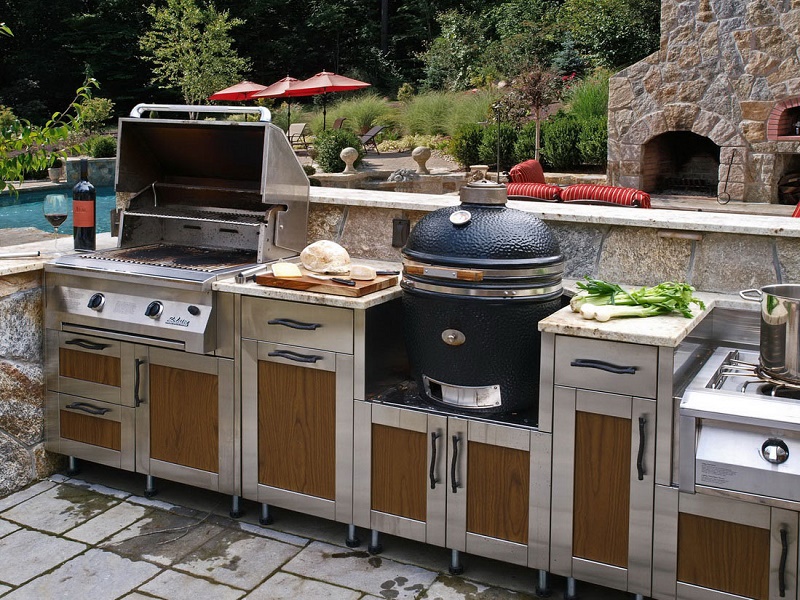
A built-in grill is worth the cost only if you are designing a permanent outdoor kitchen structure and plan to host large gatherings regularly. Otherwise, a freestanding cart-style grill offers superior flexibility and a much lower total investment.
Built-in grills require a non-combustible enclosure, gas line plumbing, and professional installation. They tie you to a fixed location. If you move homes or want to rearrange your patio, you lose the entire investment. Freestanding grills on wheels give you the freedom to move for cleaning, storage, or tailgating. A high-quality freestanding grill with stainless steel construction will perform just as well as a built-in model for 40-60% less cost. Unless you have a dedicated outdoor kitchen planned, skip the built-in option.
Can a Cheap Grill Ever Be a Good Buy?
A cheap grill can be a good buy only if you grill fewer than ten times per year and are prepared to replace it within two to three years. In this narrow scenario, a budget grill avoids overpaying for unused features.
However, for anyone who grills weekly or seasonally, a cheap grill becomes a false economy. The thin metal warps, burners clog, and paint peels. You end up spending more on replacement parts (or a new grill) than you would have on one quality unit. Look for value, not price. Value means a grill with a heavy-gauge lid, cast iron or stainless steel cooking grates, and a good warranty for under $700. Avoid anything under $300 unless you are okay with disposable quality.
How Many BTUs Do You Actually Need?
You need between 80 and 100 BTUs per square inch of primary cooking area. More BTUs do not mean a better grill; higher BTUs with poor heat distribution create hotspots and wasted energy.
Manufacturers often inflate BTU numbers to impress buyers. A grill claiming 60,000 BTUs on a tiny cooking surface is inefficient and will scorch food. Instead of looking at total BTUs, divide the total BTU rating by the number of burners to get the BTU per burner. Most residential grills perform well with 10,000 to 12,000 BTUs per burner. For searing, you want at least 12,000 BTUs per burner, but the heat distribution system matters more than raw numbers. A grill with 40,000 BTUs and excellent heat plates will outperform a grill with 60,000 BTUs and poor design.
What Is the Best Way to Test a Grill Before Buying?
The best way to test a grill is to physically visit a showroom, lift the lid, and check for wobbles, door seals, and grate heft. Online specs cannot tell you about build quality or assembly difficulty.
When you are in front of a grill, perform these checks:
- Lid test: Open and close the lid. It should feel heavy and close with a solid “thump”, not a tinny rattle.
- Wobble test: Gently push the cart from side to side. It should not wiggle or feel unstable.
- Grate test: Lift the cooking grate. Cast iron should feel very heavy. Stainless steel should feel thick, not flimsy.
- Ignition test: Press the ignition button. It should click with resistance and produce a spark you can see.
If you cannot visit a store, watch unboxing and assembly videos on YouTube. These reveal the true build quality and complexity of assembly better than any product description.
How Do You Avoid Buying a Grill That Is Too Small?
To avoid buying a grill that is too small, measure the largest meal you actually cook (e.g., burgers, steaks, chicken pieces) and calculate the space needed. A good rule is 100 square inches per person for a full meal.
For example, if you cook for six people and each eats one burger (roughly 25 square inches each) plus two sausages and a vegetable, the total is about 600 square inches of primary space. Add 25% for margin, and you need 750 square inches. If you buy a 500-square-inch grill, you will be cooking in batches while the first batch gets cold. Be honest about your hosting habits. If you host holidays or birthdays, double the number of people you typically cook for when sizing. It is better to have extra space than to crowd the grill and end up with uneven cooking.
What Warranty Features Should You Look For?
You should look for a grill that offers a 10-year warranty on burners, a 5-year warranty on the firebox, and a 2-year warranty on parts and paint. This tiered warranty structure indicates the manufacturer stands behind the core components.
Avoid grills with a blanket “1-year limited warranty” on everything. This suggests the company expects the grill to fail quickly. Pay attention to what is excluded. Many warranties exclude rust and cosmetic issues. Also, check if the warranty is transferable. If you ever sell your home, a transferable warranty adds resale value. A good warranty does not guarantee a perfect grill, but it provides a safety net if something goes wrong due to manufacturing defects.
Don’t just buy for this summer; look at the construction materials. Investing in a heavy-duty stainless steel or cast-iron model ensures you get a high-quality Outdoor Grill for Long-Term Use that won’t rust out after one season.
Frequently Asked Questions
Should I buy a grill with a side burner?
A side burner is useful if you regularly cook sides like beans, sauces, or vegetables while grilling. Otherwise, it occupies space and adds cleaning hassle. Most occasional grillers rarely use it.
Is stainless steel better than cast iron for grates?
Cast iron retains heat better for superior searing but requires seasoning maintenance to prevent rust. Stainless steel is easier to clean and never rusts but does not sear as intensely. Choose based on your willingness to maintain the grates.
How long should a good outdoor BBQ grill last?
A well-maintained, high-quality grill should last 10-15 years with proper care. Budget grills typically last 3-5 years. The key factor is the thickness of the steel and the quality of the paint or stainless steel finish.
Can I use a gas grill for smoking?
Yes, but it requires a smoker box or a dedicated smoking technique using wood chips wrapped in foil. Gas grills do not produce the same smoke flavor as charcoal or dedicated smokers, but they can work for light smoking.
What is the difference between propane and natural gas grills?
Propane grills use portable tanks and are portable. Natural gas grills require a permanent gas line connection but never run out of fuel. Choose natural gas if you have a dedicated outdoor kitchen; choose propane for flexibility and portability.
When should I replace my grill instead of repairing it?
Replace your grill when the firebox rusts through, the burners are warped beyond cleaning, or replacement parts cost more than 50% of a new grill. Rust in the firebox is a safety hazard and usually signals the end of the grill’s life.
Do I need a cover for my outdoor grill?
Yes, a heavy-duty, waterproof cover significantly extends grill life by protecting against rain, UV rays, and dust. Even stainless steel grills benefit from a cover to prevent pitting from bird droppings or mineral deposits.
Conclusion
Buying the right outdoor BBQ grill is not about finding the most expensive model or the one with the highest BTU count. It is about matching the grill to your cooking style, your space, your budget, and your willingness to maintain it. By focusing on material quality over flashy features, measuring actual cooking space, and testing build quality before you buy, you can sidestep the expensive mistakes that turn grilling into a chore. Start by narrowing your search to a gas or charcoal type based on your flavor priorities, then apply the material and sizing checks outlined here. Your next grill can be the one that lasts for a decade and finally makes you the backyard hero you always wanted to be.