

When you walk through your home, you likely pass dozens of doors without giving much thought to their construction. However, understanding the components that make up a door system can be incredibly valuable for homeowners. Door jambs play a crucial role in your home’s functionality, security, and aesthetic appeal. For comprehensive home improvement insights and door-related guidance, Decoracaos offers expert resources to help you make informed decisions about your living space.
A door jamb serves as the vertical frame that surrounds your door opening. Most homeowners encounter door jamb issues at some point, whether during renovation projects or routine maintenance. Additionally, knowing what is a door jamb pictures can help illustrate these components clearly, making it easier to identify problems and communicate with contractors or hardware store employees.
Understanding door jambs becomes essential when you face common household situations. For instance, you might notice your door isn’t closing properly, or you may want to replace old hardware. Therefore, having a solid grasp of door jamb anatomy can save you time and money on home improvement projects.
What Exactly Is a Door Jamb?
A door jamb consists of the three pieces of wood or metal that form the frame around your door opening. The vertical sides are called side jambs, while the horizontal piece across the top is the head jamb. These components work together to create a stable structure that supports your door and provides a seal against weather elements.
The door jamb serves multiple purposes beyond simply holding your door in place. It provides a mounting surface for hinges, door handles, and locks. Furthermore, it creates a weatherproof barrier when combined with proper weatherstripping and threshold installation.
Door jambs come in various materials including wood, steel, and composite materials. Wood jambs remain the most common choice for residential applications due to their versatility and ease of customization. However, steel jambs offer superior security and durability, making them popular for commercial applications and high-security residential installations.
Key Components of a Door Jamb System
Side Jambs
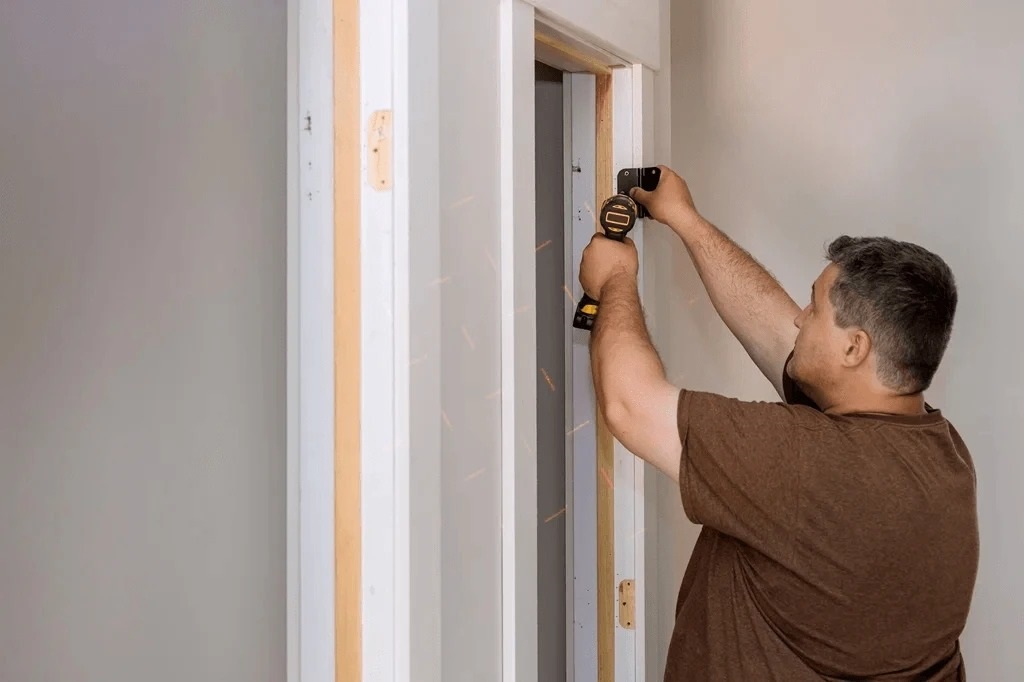
The side jambs run vertically on both sides of the door opening. The hinge jamb contains the mounting points for door hinges, while the strike jamb houses the door latch mechanism. These vertical components must be perfectly plumb to ensure proper door operation and prevent premature wear on hardware components.
Side jambs typically measure between 4-9/16 inches to 6-9/16 inches in width, depending on wall thickness and door style. The depth must match your wall construction to create a flush finish with your interior trim work.
Head Jamb
The head jamb spans horizontally across the top of the door opening. This component bears significant weight and stress, particularly with heavy solid wood or steel doors. Therefore, proper installation and adequate support are critical for long-term performance.
Head jambs often incorporate stop molding that prevents the door from swinging too far inward. Additionally, this area frequently houses the top portion of weatherstripping systems in exterior door applications.
Door Stop
Door stops are thin strips of wood or metal attached to the jamb that prevent the door from swinging past its closed position. These components also provide a surface for weatherstripping installation and help create a tight seal when the door is closed.
The door stop position determines how your door sits within the frame. Proper placement ensures adequate clearance for carpet or flooring while maintaining an effective seal against drafts and moisture.
Why Door Jambs Matter for Your Home
Structural Integrity
Door jambs provide essential structural support for your door system. Without properly installed and maintained jambs, doors can sag, bind, or fail to close securely. This structural role becomes particularly important for heavy doors or high-traffic areas where constant use places additional stress on the frame components.
Moreover, door jambs help distribute the weight and force from door operation across the surrounding wall structure. This distribution prevents localized damage and extends the lifespan of both the door and the surrounding wall materials.
Security Features
A properly installed door jamb significantly enhances your home’s security. The strike jamb must be strong enough to resist forced entry attempts, while the overall frame integrity prevents doors from being easily compromised. According to Consumer Reports, reinforcing door jambs with longer screws and strike plates can dramatically improve residential security.
Furthermore, the door jamb provides mounting points for deadbolts, security chains, and other protective hardware. The strength and stability of these mounting surfaces directly impact the effectiveness of your security measures.
Energy Efficiency
Well-fitted door jambs contribute significantly to your home’s energy efficiency. Gaps or warping in jamb components can create air leaks that increase heating and cooling costs. Therefore, maintaining proper jamb alignment and condition helps optimize your home’s thermal performance.
Professional weatherstripping installation relies on square, stable jambs to create effective seals. Even minor jamb irregularities can compromise weatherstripping performance and lead to energy waste.
Common Door Jamb Problems and Solutions
Warping and Swelling
Wood door jambs can warp or swell due to moisture exposure, temperature changes, or settling. These issues often manifest as doors that stick, don’t close properly, or create gaps when closed. Regular inspection and prompt attention to moisture sources can prevent minor warping from becoming major problems.
Hardware Failure
Loose hinges, stripped screw holes, and damaged strike plates frequently affect door jamb performance. These issues typically develop gradually and may not be immediately obvious. However, addressing hardware problems promptly prevents more extensive damage to the jamb structure.
Damage from Forced Entry
Unfortunately, door jambs sometimes suffer damage from break-in attempts or accidental impacts. Split wood, bent metal, or pulled-out strike plates require immediate attention to restore security and functionality.
Installation and Maintenance Tips
Professional vs. DIY Installation
While skilled DIY enthusiasts can handle door jamb installation, the precision required for proper alignment makes professional installation worthwhile for many homeowners. Incorrectly installed jambs can cause persistent problems that are difficult and expensive to correct later.
Regular Maintenance Practices
Inspect your door jambs seasonally for signs of wear, damage, or shifting. Look for gaps around the door perimeter, difficulty closing or opening doors, and loose hardware components. Additionally, check weatherstripping condition and replace worn materials promptly.
Keep jamb surfaces clean and properly finished to prevent moisture damage. Wood jambs benefit from periodic refinishing, while metal jambs may require touch-up painting to prevent rust and corrosion.
Choosing the Right Door Jamb for Your Project
Material Considerations
Select door jamb materials based on your specific application requirements. Wood jambs offer versatility and ease of customization but require more maintenance than metal alternatives. Steel jambs provide superior security and durability but cost more and require professional installation.
Size and Configuration Options
Door jamb sizing must match your wall thickness and door specifications exactly. Standard residential jambs accommodate 2×4 and 2×6 wall construction, while custom applications may require special sizing or configuration.
Read More Also: How to make mugs a meaningful gift
Conclusion
Door jambs represent a critical but often overlooked component of your home’s door systems. These frames provide structural support, security, and energy efficiency while serving as mounting surfaces for essential hardware. Understanding door jamb function and maintenance requirements helps homeowners make informed decisions about installation, repair, and replacement projects. Regular inspection and prompt attention to problems ensure your door jambs continue providing reliable service for years to come. Whether you’re planning a renovation or simply maintaining your current doors, knowledge of door jamb systems proves invaluable for successful outcomes.
Read More Also: How to Make a Roof in Minecraft Fast
Frequently Asked Questions
What is the difference between a door jamb and a door frame?
A door jamb specifically refers to the vertical and horizontal pieces that immediately surround the door opening, while a door frame includes the jamb plus additional structural components like the rough opening framing. The jamb is the finished interior portion that you see and interact with daily.
How do I know if my door jamb needs replacement?
Signs that indicate door jamb replacement include visible splitting or cracking, doors that won’t close properly despite adjustments, gaps around the door perimeter, loose hardware that won’t tighten securely, and evidence of water damage or rot in wood jambs.
Can I replace just part of a door jamb?
In many cases, you can replace individual jamb components rather than the entire frame. However, partial replacement works best when damage is localized and the remaining jamb structure is sound. Extensive damage typically requires complete jamb replacement for optimal results.
What tools do I need to install a door jamb?
Door jamb installation requires a level, square, measuring tape, saw, drill, screws, shims, and safety equipment. Additionally, you may need a planer for fitting adjustments and a nail gun for efficient installation. Professional-grade tools produce better results for complex installations.
How much does door jamb replacement typically cost?
Door jamb replacement costs vary widely based on materials, door size, and installation complexity. Basic wood jamb replacement may cost $200-400 including labor, while premium materials or complex installations can exceed $800. Getting multiple quotes helps ensure fair pricing for your specific situation.