
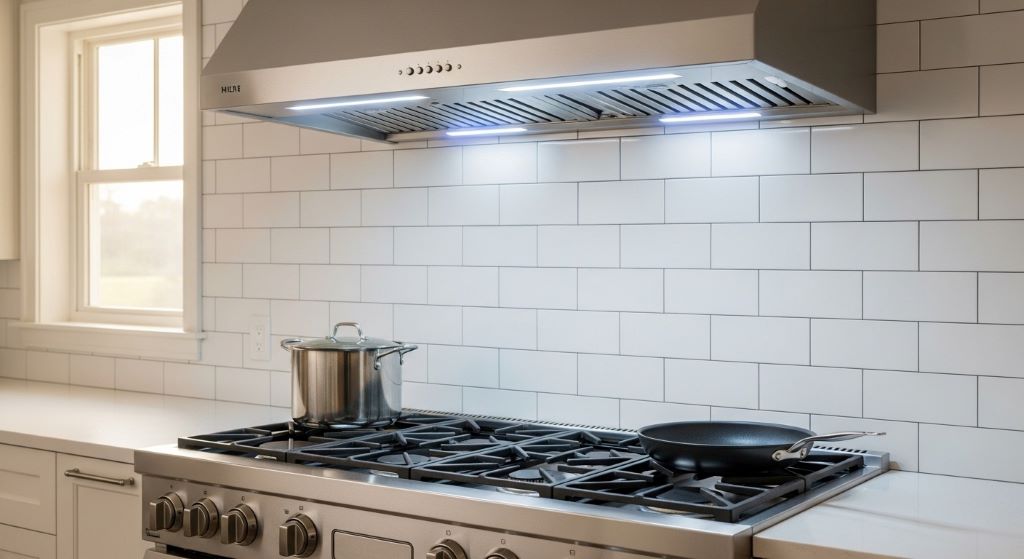

Cooking fills your home with wonderful aromas, but it also produces grease, smoke, heat, and moisture that can damage your kitchen over time. A quality exhaust fan removes these unwanted byproducts while keeping your cooking space comfortable and clean. Choosing the right one, however, involves understanding several important factors that affect performance and suitability for your specific needs.
Many homeowners struggle with this decision because the market offers countless options with varying features and price points. Additionally, not every exhaust fan works well in every kitchen. Your cooking habits, kitchen size, and home layout all influence which model will serve you best. This comprehensive guide will help you navigate these choices and select an exhaust fan that truly meets your requirements.
Understanding How Exhaust Fans Work
Before diving into selection criteria, it’s helpful to understand what these appliances actually do. Kitchen exhaust fans pull contaminated air away from your cooking surface and either vent it outside or filter and recirculate it back into your kitchen.
Ducted systems connect to ductwork that channels air outside your home. These systems are more effective because they completely remove smoke, grease particles, moisture, and odors from your living space. Once the air exits through the duct, it’s gone for good.
Ductless systems, also called recirculating systems, filter the air through charcoal and grease filters before returning it to your kitchen. While these systems are easier to install and work in situations where ducting isn’t possible, they’re less effective overall. They remove some grease and odors but cannot eliminate heat or moisture.
The fan motor creates suction that draws air upward from your cooking surface. This air passes through filters that trap grease particles before the air either exits through ductwork or gets recirculated. Understanding this basic operation helps you appreciate why certain features matter more than others.
Measuring Your Kitchen’s Ventilation Needs
One of the most critical factors in choosing an exhaust fan is ensuring it has adequate power for your kitchen. This power is measured in cubic feet per minute, commonly abbreviated as CFM. This number tells you how much air the fan can move in one minute.
Calculate your minimum CFM requirement using your kitchen’s size. Measure your kitchen’s square footage and multiply by two. For example, a 150-square-foot kitchen needs at least 300 CFM. However, this is just a starting point.
Your cooking style significantly impacts your ventilation requirements. If you frequently use high-heat cooking methods like wok cooking, searing steaks, or frying foods, you’ll need more powerful ventilation. Professional-style ranges also demand higher CFM ratings because they produce more heat and smoke than standard residential ranges.
The general rule suggests 100 CFM for every 10,000 BTUs of burner output for gas ranges. Therefore, if your range produces 40,000 BTUs, you need at least 400 CFM. Electric ranges typically require less ventilation, but high-powered induction cooktops may need stronger fans.
Consider your ductwork length as well. Longer duct runs with multiple bends reduce efficiency. For every 90-degree turn in your ductwork, add 25 CFM to your base requirement. For every 10 feet of straight duct, add another 25 CFM.
Exploring Different Exhaust Fan Styles
Kitchen exhaust fans come in several distinct styles, each suited to different kitchen layouts and aesthetic preferences. Understanding these options helps narrow your choices based on your specific situation.
Under-cabinet range hoods mount beneath your cabinets directly above your cooktop. These are the most common and typically the most affordable option. They work well in kitchens with standard cabinet layouts and ceiling heights. However, they’re limited to the width of your cabinet space.
Wall-mounted chimney hoods attach directly to the wall above your range. These create a striking visual statement and work well when you don’t have cabinets above your cooking surface. They come in various styles from sleek modern designs to traditional decorative options.
Island range hoods suspend from the ceiling above island cooktops. Since they have no wall support, they must be powerful enough to capture rising air effectively. These require ceiling-mounted ductwork and professional installation in most cases.
Downdraft systems rise from behind your cooktop when needed and retract when not in use. These work well for island installations where you don’t want a hood blocking sightlines across your kitchen. However, they’re generally less effective than overhead systems because they work against the natural rise of hot air.
Insert hoods, also called liner hoods, fit inside custom cabinetry. These allow you to create a seamless look that matches your kitchen design while still providing effective ventilation. They’re popular in high-end kitchen renovations.
Evaluating Noise Levels and Sound Management
Exhaust fans produce noise, and this can significantly impact your kitchen experience. Nobody wants to shout over a roaring fan during dinner preparation or family conversations.
Noise levels are measured in sones. One sone equals roughly the sound of a quiet refrigerator. Most range hoods operate between 1 and 8 sones, with lower numbers indicating quieter operation.
For comfortable conversation while cooking, look for models rated at 3 sones or less on their typical operating speed. Some premium models operate as quietly as 1 to 1.5 sones, making them nearly whisper-quiet.
Understanding that higher fan speeds produce more noise is important. Many models offer multiple speed settings, allowing you to use lower, quieter speeds for light cooking and reserve maximum power for high-heat situations.
Remote or inline blowers can dramatically reduce kitchen noise. These systems place the motor outside your living space, typically in your attic or outside your home. Only the capture hood remains in your kitchen, making operation much quieter. However, these systems cost more and require professional installation.
Consider testing floor models in stores when possible. Specifications provide useful information, but hearing the actual sound gives you a better sense of whether you’ll find it acceptable in your home.
Understanding Filter Systems and Maintenance
Every exhaust fan uses filters to trap grease particles before they enter your ductwork or recirculation system. These filters require regular maintenance to keep your system working effectively.
Mesh filters are the most common type in residential applications. Made from aluminum or stainless steel, these washable filters catch grease particles as air passes through multiple layers of mesh. Clean these filters monthly by running them through your dishwasher or washing by hand with degreasing soap.
Baffle filters use a maze-like design that changes air direction multiple times, causing grease to condense and drip into a collection tray. These are more efficient than mesh filters and are favored in professional kitchens. They’re also dishwasher-safe and require monthly cleaning.
Charcoal filters are necessary for ductless systems. These filters absorb odors but cannot be cleaned. Replace them every three to six months depending on your cooking frequency. Some models use permanent charcoal filters that you can regenerate by heating in your oven, though these are less effective than disposable versions.
Maintaining your filters is crucial for effective kitchen ventilation tips. Clogged filters reduce airflow, forcing your fan to work harder while removing less contamination from your air. They also create fire hazards as accumulated grease can ignite.
Some modern hoods include filter saturation indicators that alert you when cleaning is needed. These helpful features ensure you don’t forget this important maintenance task.

Considering Installation Requirements and Costs
Installation complexity and cost vary significantly depending on the type of exhaust fan you choose and your kitchen’s current configuration. These factors should influence your decision from the beginning.
If you’re replacing an existing ducted hood with a similar model, installation is relatively straightforward. You’ll use existing ductwork and electrical connections, making this a project some homeowners can tackle themselves or hire a handyman to complete.
Installing a new ducted system where none existed before requires significant work. You’ll need ductwork running from your hood to an exterior wall or roof. This often involves cutting through cabinets, walls, or ceilings. Professional installation is strongly recommended for these projects.
Ductwork should be made from rigid metal rather than flexible ducting when possible. Smooth metal ducts allow better airflow with less resistance. Keep duct runs as short and straight as possible for optimal performance.
Electrical requirements vary by model. Most residential range hoods use standard 120-volt outlets, but some high-powered models require dedicated circuits or 240-volt power. Verify your electrical capacity before purchasing.
Ductless installations are simpler because they don’t require exterior venting. However, you’ll still need proper electrical connections and secure mounting. These systems work well in condominiums or apartments where exterior ducting isn’t permitted.
Budget for professional installation if you’re uncomfortable with electrical work or if your project involves ductwork modifications. While this adds to your total cost, proper installation ensures safe and effective operation.
Examining Additional Features and Technology
Modern exhaust fans offer numerous features beyond basic smoke removal system functions. Some of these features genuinely improve functionality, while others are more about convenience or aesthetics.
Lighting is standard on most range hoods. However, light quality and type vary considerably. LED lights provide bright, energy-efficient illumination that lasts for years. Some models offer adjustable color temperature, letting you choose warm or cool lighting to match your preference.
Variable speed controls allow you to adjust fan power based on your current cooking needs. Multi-speed models typically offer three to six settings. More speed options provide greater flexibility, though three speeds satisfy most households.
Automatic sensors detect heat, smoke, or humidity and adjust fan speed automatically. These convenient features ensure adequate ventilation without requiring you to remember to turn on the fan or adjust settings manually.
Timer functions allow the fan to continue running for a specified period after you finish cooking. This extended operation clears remaining smoke and odors from your kitchen.
Remote controls let you adjust settings without reaching up to the hood. This convenience is particularly nice for high-mounted hoods or when you’re busy cooking and don’t want to interrupt your workflow.
Easy-clean surfaces with stainless steel or glass exteriors resist staining and wipe clean quickly. Some models feature seamless designs without crevices where grease can accumulate.
Matching Style to Your Kitchen Design
Your exhaust fan is a prominent visual element in your kitchen. Therefore, choosing a style that complements your overall design is important for aesthetic cohesion.
Stainless steel remains the most popular finish because it matches most appliances and works with contemporary, traditional, and transitional designs. Different steel finishes, from brushed to polished, create different looks.
Custom panels allow your hood to match your cabinetry exactly, creating a built-in appearance. This approach works beautifully in traditional kitchens where you want appliances to blend rather than stand out.
Glass canopy hoods offer a sleek, modern aesthetic that feels light and open. Black glass creates drama, while clear glass maintains an airy feeling.
Decorative hoods with elaborate designs, curves, or architectural details make stunning focal points in traditional or Mediterranean-style kitchens. These statement pieces often cost more but dramatically impact your kitchen’s character.
Color options have expanded beyond stainless steel. Black stainless, copper, brass, and colored finishes allow coordination with other design elements in your kitchen.
Size proportions matter for visual balance. Your hood should be at least as wide as your cooking surface, with many designers recommending it extend three to six inches beyond on each side for both aesthetic appeal and improved capture efficiency.
Evaluating Energy Efficiency and Operating Costs
While exhaust fans don’t consume as much energy as major appliances like refrigerators, their operating costs still deserve consideration, especially if you cook frequently.
Modern motors are significantly more energy-efficient than older models. Look for Energy Star certified models when available. These meet strict efficiency guidelines while maintaining strong performance.
LED lighting uses far less energy than incandescent or halogen bulbs. Considering your range hood lights might operate for hours daily, this efficiency translates into meaningful savings over time.
Variable speed controls contribute to efficiency by allowing you to use only the power needed for current conditions. Running on low speed for light cooking uses considerably less energy than constant high-speed operation.
Properly sized ventilation prevents energy waste. An oversized system pulls more conditioned air from your home than necessary, forcing your heating or cooling system to work harder to replace it. Right-sizing your system based on actual needs balances ventilation effectiveness with energy efficiency.
Make-up air considerations become important with high-CFM systems. Fans rated above 400 CFM may create negative pressure in your home, potentially causing backdrafting of combustion appliances. Some jurisdictions require make-up air systems for powerful ventilation. These systems introduce fresh air to replace what the exhaust fan removes, maintaining pressure balance.
Considering Budget and Long-Term Value
Kitchen exhaust fans range from under one hundred dollars to several thousand dollars. Understanding what you get at different price points helps you make an informed decision that balances cost with features and quality.
Budget models typically offer basic functionality with simple controls, standard lighting, and adequate but not exceptional performance. These work fine for light cooking in small kitchens but may lack durability or advanced features.
Mid-range options provide better build quality, quieter operation, improved lighting, and additional features like multiple speed settings and better filters. Most homeowners find excellent value in this category.
Premium models offer superior materials, very quiet operation, powerful motors, advanced features, and exceptional aesthetics. These make sense for serious home cooks or in luxury kitchen renovations where performance and appearance are priorities.
Consider total cost of ownership beyond initial purchase price. A more expensive model with better filters, more efficient motors, and superior build quality may cost less over its lifetime than cheaper alternatives that break down sooner or require more maintenance.
Warranty coverage indicates manufacturer confidence in their product. Look for models with at least a one-year warranty, with longer coverage periods suggesting higher quality construction.
Making Your Final Decision
After considering all these factors, you’re ready to narrow your choices and make a final decision. Start by identifying your non-negotiable requirements based on your kitchen’s physical constraints and your cooking habits.
Read reviews from actual users to learn about real-world performance and reliability. Pay particular attention to comments about noise levels, durability, and whether the unit meets expectations for smoke and odor removal.
Compare similar models from different manufacturers. Sometimes a less expensive brand offers nearly identical specifications and performance to premium brands at significant savings.
Don’t overlook professional-grade residential options if you’re a serious cook. These offer commercial-level performance in packages designed for home use, though they typically cost more and may require professional installation.
Consider purchasing from retailers with good return policies if possible. This allows you to test the unit in your actual kitchen environment and return it if it doesn’t meet your expectations.
Conclusion
Choosing the best kitchen exhaust fan requires balancing multiple factors including ventilation power, noise levels, style, features, and budget. Start by calculating your minimum CFM requirements based on your kitchen size and cooking habits. Then consider which style works best with your kitchen layout and design preferences.
Remember that proper installation is crucial for effective performance. Whether you choose a ducted or ductless system, ensure it’s correctly sized and installed according to manufacturer specifications. Regular maintenance, particularly filter cleaning, keeps your system working optimally for years.
By understanding kitchen ventilation tips and carefully evaluating your options against your specific needs, you can select an exhaust fan that effectively removes smoke, grease, and odors while operating quietly and complementing your kitchen’s aesthetic. This investment improves your cooking experience and protects your home from the damaging effects of cooking byproducts.
Frequently Asked Questions
How much CFM do I really need for my kitchen exhaust fan?
Most residential kitchens need between 300 and 600 CFM depending on size and cooking style. Calculate a baseline by multiplying your kitchen square footage by two. Add more capacity if you cook frequently with high heat, have a gas range producing over 30,000 BTUs, or have long ductwork runs. When uncertain, slightly more capacity is better than too little, as you can always run a powerful fan on lower settings.
Can I install a ductless range hood if I currently have ducting?
Yes, you can install a ductless system even if ducting exists, though this isn’t typically recommended. Ducted systems are more effective at removing heat, moisture, and cooking byproducts from your home. Consider ductless options only if your existing ductwork is damaged beyond repair or if you’re redesigning your kitchen and relocating your cooktop away from existing ducts.
How often should I clean my exhaust fan filters?
Clean mesh or baffle filters monthly if you cook daily, or every two to three months for lighter cooking schedules. Filters in households that do frequent high-heat cooking or frying need more attention. Replace charcoal filters in ductless systems every three to six months. Visible grease buildup, reduced suction, or lingering cooking odors indicate filters need immediate attention.
Why is my new exhaust fan so loud?
Several factors affect noise levels. Higher fan speeds naturally produce more sound. Check that ductwork is properly installed without air leaks or loose connections that create rattling. Ensure the fan is securely mounted to prevent vibration noise. Some noise is normal, but excessive sound may indicate installation problems or a defective unit. Models rated above 4 sones will be noticeably loud at maximum speed.
Do I need a professional to install my kitchen exhaust fan?
This depends on your skills and the complexity of the installation. Replacing a similar unit using existing ductwork and electrical connections is manageable for handy homeowners. However, hire professionals for installations requiring new ductwork, electrical circuit additions, ceiling or wall modifications, or high-powered units requiring make-up air systems. Proper installation ensures safety and optimal performance, making professional help worthwhile for complex projects.
Related Topics:
How to Make Tea in Microwave: The Easiest Modern Method
Best Stores for Utility Knives in Fairbanks, Alaska: Your Guide to Quality Blades


 0
0
 0
0


Average Rating