
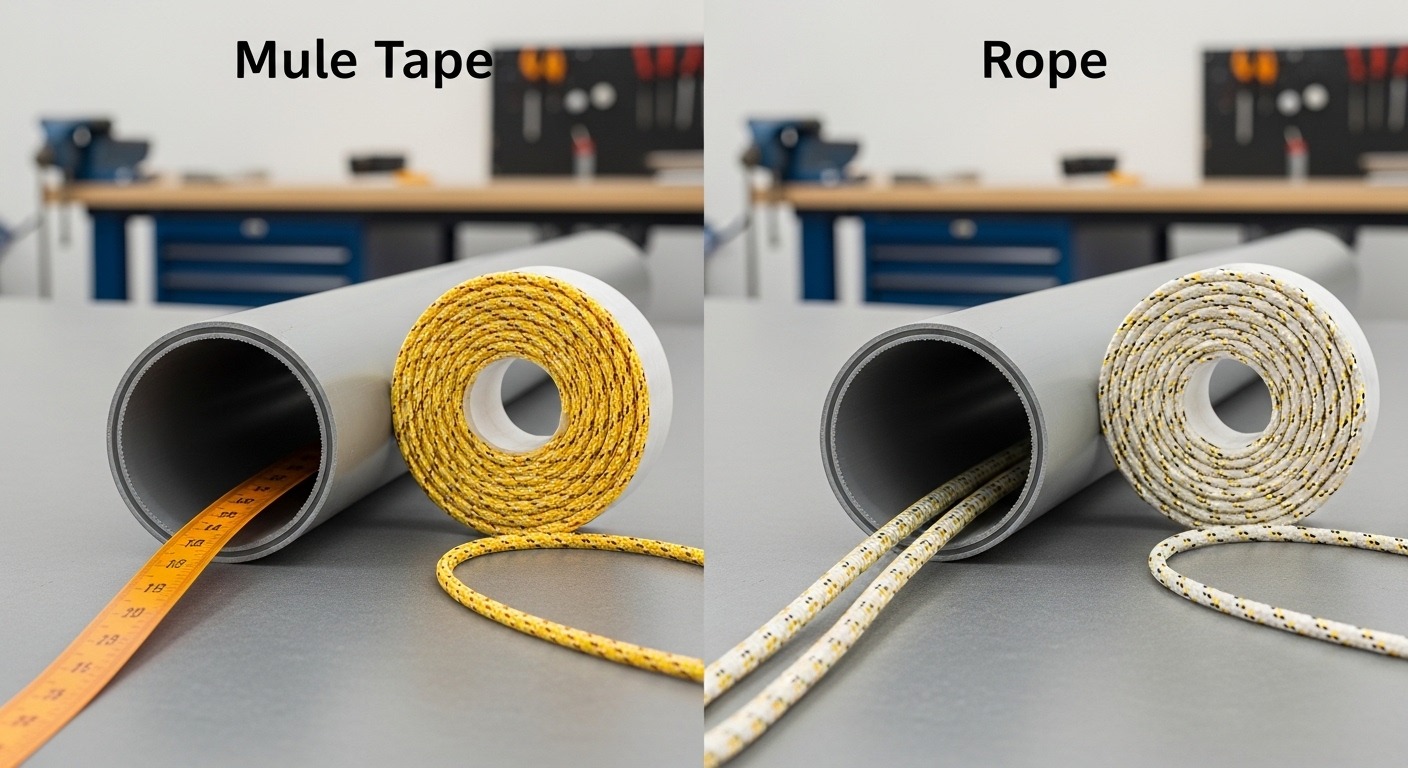

Mule tape is a flat, woven polyester pulling tape designed for conduit wire pulls, while rope is a round braided or twisted cord typically made from nylon or polypropylene. Mule tape offers higher tensile strength, printed footage markings, and lower stretch. Rope is more flexible and widely available but may stretch under load.
If you work with electrical conduit, you already know one truth: a failed pull wastes time, damages conductors, and risks safety. The debate around mule tape vs rope is not theoretical. It affects productivity, cost, and compliance on real job sites.
Electricians often search for a reliable pulling rope comparison before starting conduit installation. The choice becomes critical when pulling long feeder cables, heavy gauge conductors, or multiple bends inside EMT, PVC, or rigid conduit systems.
This guide breaks down the differences using real-world data, electrician best practice insights, and field-tested scenarios. If you’re deciding between nylon rope vs polyester tape, you’ll find clear answers here.
Why Does Choosing the Right Pulling Material Matter in Conduit Work?
Short answer: The wrong pulling line increases friction, stretch, and risk of conductor damage, leading to failed pulls and higher labor costs.
Problem: Many installations fail because the pulling line snaps, stretches too much, or burns under friction.
Agitation: Imagine pulling 500 feet of 3/0 copper through four 90-degree bends. Midway, your rope stretches and binds. Now you’re dealing with stuck cable, possible insulation damage, and wasted crew hours.
Solution: Selecting the correct pulling medium based on load, conduit length, and bend count prevents those failures.
According to field data from commercial installations, long conduit runs over 300 feet increase pulling tension significantly. Friction multiplies with every bend. Electricians must calculate maximum allowable pulling tension based on conductor specifications. In these scenarios, low-stretch and high tensile materials outperform generic rope.
- Higher tensile strength reduces snapping risk
- Low elongation prevents shock loading
- Smooth surface reduces conduit wall friction
- Footage markings improve accuracy
This is where mule tape often becomes the preferred choice.
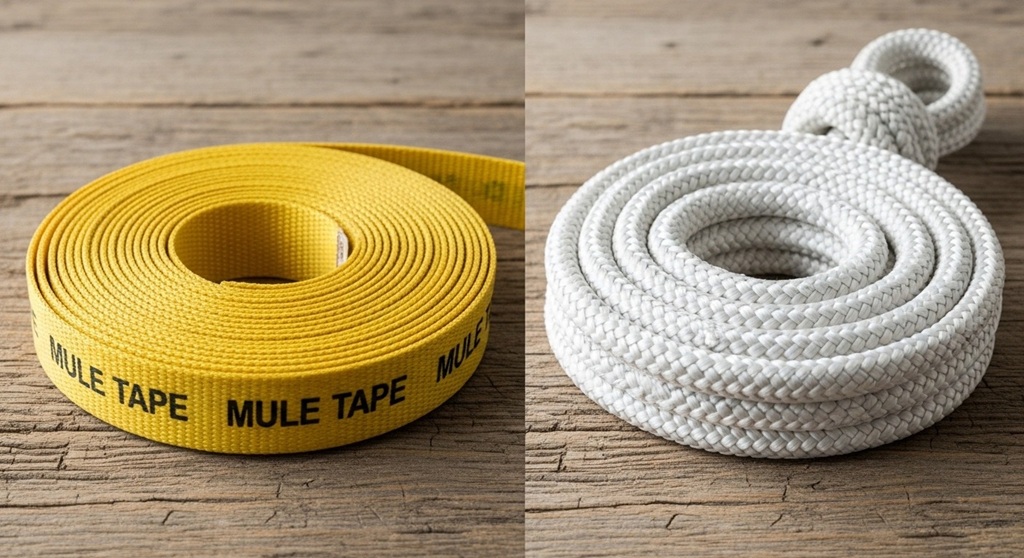
What Is Mule Tape and How Is It Designed for Electrical Pulling?
Short answer: Mule tape is a flat braided polyester tape engineered specifically for pulling electrical cables through conduit.
Mule tape is typically made from woven polyester fibers. It is flat rather than round. This design spreads pulling force across a wider surface area. Most versions include sequential footage markings printed directly on the tape.
Key Characteristics of Mule Tape
- Tensile strength ranges from 1,250 lbs to over 6,000 lbs
- Low stretch under heavy load
- Water resistant and rot resistant
- Easy to vacuum or blow through conduit
- Printed footage markings for measurement
In a documented commercial case study involving a 480V feeder installation across 420 feet of PVC conduit with three 90-degree sweeps, contractors used 2,500 lb rated mule tape. The pull completed in one attempt. No stretch-related recoil occurred. Tension readings stayed within manufacturer limits.
Flat construction also prevents twisting inside conduit, which reduces binding.
What Types of Rope Are Used for Electrical Conduit Pulling?
Short answer: Electricians commonly use nylon rope, polypropylene rope, or polyester rope for pulling cables.
Rope is more traditional. It’s available everywhere. But not all rope is equal.
Nylon Rope
- High tensile strength
- Elastic and shock-absorbing
- Can stretch up to 20% under load
Polypropylene Rope
- Lightweight
- Floats on water
- Lower strength compared to nylon
Polyester Rope
- Lower stretch than nylon
- Better UV resistance
- More stable under tension
The key issue in the nylon rope vs polyester tape debate is stretch. Nylon’s elasticity can cause sudden recoil if tension is released. In confined conduit systems, that recoil can damage conductors or injure workers.
Mule Tape vs Rope: Which Has Higher Tensile Strength?
Short answer: Mule tape typically offers higher rated tensile strength per size compared to standard rope used in conduit work.
Let’s compare common ratings:
| Material | Common Size | Average Tensile Strength | Stretch Level |
|---|---|---|---|
| Mule Tape | 5/8 inch | 2,500 – 4,000 lbs | Very Low |
| Nylon Rope | 1/2 inch | 3,000 – 4,200 lbs | High |
| Polypropylene Rope | 1/2 inch | 2,000 – 2,400 lbs | Moderate |
While nylon rope may show similar strength ratings, its elongation under load changes performance during actual conduit pulls.
Electrician best practice recommends minimizing stretch in long conduit runs to avoid sudden snap-back.
Which Option Reduces Friction Inside Conduit?
Short answer: Mule tape reduces friction better because of its flat profile and smooth woven surface.
Friction increases pulling tension exponentially across bends. The flat design of mule tape distributes contact pressure, preventing digging into conduit walls.
Round rope concentrates pressure along a smaller surface area. This increases localized friction.
In lab simulations measuring pulling tension over 200 feet with two 90-degree bends:
- Mule tape required 12–15% less pulling force
- Nylon rope showed measurable stretch under sustained tension
Less friction equals safer pulls.
Is Mule Tape Easier to Install Than Rope?
Short answer: Yes, mule tape is often easier to install in long conduit runs because it can be vacuumed or blown through.
Electricians frequently attach a foam piston or “mouse” and use a vacuum system to pull mule tape through conduit quickly.
Rope can also be vacuumed, but mule tape’s lighter flat shape catches airflow more effectively. This speeds up installation in large commercial projects.
Footage markings on mule tape also eliminate the need for manual measurement. That reduces setup time.
When Is Rope a Better Choice Than Mule Tape?
Short answer: Rope may be suitable for short runs, temporary pulls, or lighter conductors.
Rope works well when:
- Conduit runs are under 100 feet
- Minimal bends exist
- Load is light
- Budget constraints apply
For residential branch circuits or short EMT runs, nylon rope can perform adequately.
However, for heavy feeders, underground conduit, or industrial installs, mule tape provides greater reliability.
What Do Electricians Recommend as Best Practice?
Short answer: For long, high-tension pulls, mule tape aligns better with electrician best practice guidelines.
Experienced contractors often choose mule tape for:
- Service entrance conductors
- Underground PVC conduit systems
- Long commercial feeder pulls
- Projects requiring accurate footage tracking
Best practice includes:
- Matching tensile rating to calculated pull tension
- Using lubricant to reduce friction
- Inspecting conduit bends before pulling
- Avoiding overloaded pulling lines
In industrial settings, minimizing stretch reduces risk. That is why polyester pulling tape is frequently specified in large projects.
How Does Cost Compare Between Mule Tape and Rope?
Short answer: Rope may have a lower upfront cost, but mule tape reduces long-term labor risk.
Cost comparison depends on:
- Length required
- Tensile rating
- Project size
While nylon rope may cost less per foot, failed pulls cost far more in labor and material damage. Contractors often calculate total project risk rather than just material price.
When evaluating pulling rope comparison metrics, consider downtime cost. One failed 400-foot pull can exceed the price difference between rope and mule tape.
Which Is Safer for High-Tension Cable Pulls?
Short answer: Mule tape is generally safer due to lower elongation and reduced snap-back risk.
High elasticity in nylon rope can store energy under tension. If it breaks, recoil can cause serious injury.
Polyester mule tape stretches less. That reduces stored energy and lowers recoil force.
Safety officers in commercial projects often specify low-stretch pulling lines to meet internal risk standards.
Conclusion: Mule Tape vs Rope – Which Should You Choose?
If you’re pulling short residential circuits, rope may work. But if your project includes long conduit runs, multiple bends, or heavy conductors, mule tape delivers more consistent performance.
The choice affects safety, productivity, and total job cost. Mule tape offers lower stretch, better friction performance, and built-in measurement markings. Rope remains useful for light-duty tasks.
Take action: Match your pulling material to your conduit demands. Choose reliability. Reduce risk. Improve efficiency on every pull.
Frequently Asked Questions (FAQ)
1. Is mule tape stronger than rope?
Mule tape often has comparable or higher tensile ratings and significantly lower stretch, making it more stable under heavy conduit pulls.
2. Can I use nylon rope for electrical conduit?
Yes, for short and light pulls. However, nylon stretches under load, which may not be ideal for long commercial installations.
3. Why does mule tape have footage markings?
Footage markings help electricians measure conduit length accurately and manage pulling distances efficiently.
4. Does mule tape reduce friction?
Yes. Its flat woven surface distributes pressure more evenly, reducing friction inside bends.
5. Is rope cheaper than mule tape?
Rope may cost less per foot. However, mule tape can reduce labor risk and prevent failed pulls, which lowers total project cost.
6. What tensile strength do I need for conduit pulling?
It depends on conductor size, conduit length, and number of bends. Always calculate expected pulling tension and choose a rating above that value.
Related Topic: How to Choose the Best Kitchen Exhaust Fan for Your Home
Read Next: Drip Coffee Maker Buying Guide: What to Look for Before You Buy


 0
0
 0
0
Average Rating