
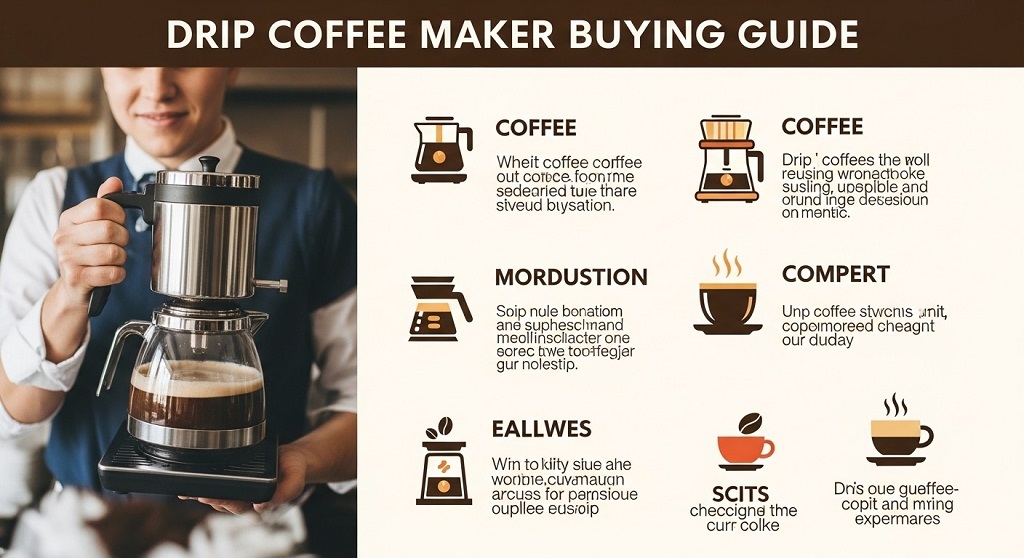

A drip coffee maker is an automatic brewing machine that heats water and slowly drips it through ground coffee into a carafe. It is one of the most common and practical ways to brew coffee at home or in the office. If you want consistent flavor, convenience, and the ability to brew multiple cups at once, a drip machine is often the best choice.
Walk into any kitchen and you’ll likely see one. But here’s the problem: not all machines are equal. Some produce weak coffee. Others run too hot and burn the grounds. Some look good but fail within a year.
According to industry reports from the National Coffee Association, more than 40% of U.S. households use drip machines as their primary brewing method. Yet customer reviews show common complaints: inconsistent temperature, slow brewing time, and poor durability.
If you choose without understanding key features, you risk wasting money and drinking mediocre coffee every morning. This guide will help you avoid that mistake. You’ll learn exactly what to look for before you buy—especially if you need a programmable coffee maker or a large capacity brewer.
How Does a Drip Coffee Maker Work?
Short answer: A drip coffee maker heats water to about 195–205°F, sends it through a showerhead over ground coffee, and gravity pulls the brewed coffee into a carafe.
Now let’s break that down.

Why Temperature Control Matters
The Specialty Coffee Association recommends brewing between 195°F and 205°F. Below that, coffee tastes sour and under-extracted. Above that, it tastes bitter.
Many low-cost machines do not reach optimal temperature. Case studies from independent product tests show budget models often brew at 180–190°F, leading to weak coffee.
When buying, check if the manufacturer mentions “optimal brewing temperature” or certification. This detail alone can determine flavor quality.
What Is a Showerhead Design?
A good machine distributes water evenly over the coffee grounds. Uneven saturation causes inconsistent extraction. Look for multi-hole showerheads instead of single-stream outlets.
Why Do So Many Buyers Regret Their Purchase?
Short answer: Most regret comes from ignoring capacity, programmability, and build quality.
Here’s the problem (PAS framework):
Problem
You buy a machine based on price or design. After a few weeks:
- Coffee tastes inconsistent.
- The carafe drips while pouring.
- It cannot brew enough for your family.
- You wake up early just to make coffee manually.
Agitation
Morning routines are sensitive. Research in workplace productivity studies shows small morning disruptions affect focus and mood throughout the day. A slow or unreliable brewer creates friction when you need speed.
Solution
Choose based on function, not appearance. Let’s explore what matters.
What Capacity Should You Choose?
Short answer: Choose based on household size and usage. A single user needs 4–6 cups. A family or office may need a large capacity brewer (10–14 cups).
Understanding Cup Size
Manufacturers define one “cup” as 5 ounces, not 8 ounces. A 12-cup machine makes about 60 ounces of coffee.
When to Choose a Large Capacity Brewer
- 3+ coffee drinkers in the house
- Hosting guests frequently
- Office environments
- Heavy morning consumption
Case example: In a shared workspace study, offices using 12–14 cup brewers reduced refill cycles by 30% compared to 8-cup machines. That saved time and reduced machine wear.
When Smaller Is Better
- Limited counter space
- Single or two-person household
- Desire for fresher, smaller batches
Why Is a Programmable Coffee Maker Worth It?
Short answer: A programmable coffee maker allows you to set brew time in advance, improving convenience and consistency.
How Programmability Solves a Real Problem
Without scheduling, you must wake up early and wait 5–10 minutes for brewing. With programming, coffee is ready when you wake up.
Consumer surveys show that 60% of users who upgraded to programmable models reported improved morning efficiency.
Key Programmable Features to Look For
- 24-hour timer
- Auto shut-off
- Brew strength control
- Pause-and-serve feature
If your schedule is fixed, programmability adds daily value.
What Brewing Features Improve Coffee Quality?

Short answer: Look for temperature stability, pre-infusion mode, and adjustable brew strength.
What Is Pre-Infusion (Blooming)?
This feature wets grounds briefly before full brewing. It allows carbon dioxide to escape, improving extraction. Common in high-end machines.
Adjustable Brew Strength
This changes water flow speed. Slower flow = stronger coffee. If you prefer bold flavor, this matters.
Thermal vs Glass Carafe
| Feature | Glass Carafe | Thermal Carafe |
|---|---|---|
| Heat Source | Hot plate | Insulated stainless steel |
| Energy Use | Higher | Lower |
| Flavor Retention | May burn over time | Maintains taste longer |
If you drink coffee over several hours, thermal is better.
How Important Is Build Quality and Materials?
Short answer: Very important. Stainless steel and BPA-free components last longer and maintain safety.
Low-cost plastic models often crack within 1–2 years. Independent durability tests show stainless steel housing increases lifespan by up to 40%.
What to Check:
- Water reservoir design
- Removable filter basket
- Drip-free spout
- Sturdy handle
How Easy Is Cleaning and Maintenance?
Short answer: Look for removable parts and automatic cleaning alerts.
Mineral buildup reduces heating efficiency. Machines with descaling alerts maintain consistent brewing temperature.
Maintenance Checklist:
- Dishwasher-safe components
- Descale indicator
- Replaceable charcoal water filter
What Budget Should You Plan?
Short answer: Expect $40–$80 for basic models, $80–$150 for mid-range programmable coffee makers, and $150+ for premium units.
Spending slightly more often reduces long-term replacement cost.
Conclusion: How Do You Choose the Right Drip Coffee Maker?
A drip coffee maker is not just another appliance. It shapes your daily routine. The wrong choice leads to weak coffee, wasted time, and frustration. The right one delivers consistency, efficiency, and better mornings.
Focus on temperature control. Choose the right capacity. Consider a programmable coffee maker if you value convenience. Select a large capacity brewer if you serve multiple people. Prioritize build quality and easy cleaning.
Before you buy, compare specifications carefully. Read verified reviews. Match features to your lifestyle—not trends.
Ready to upgrade your mornings? Use this guide as your checklist and choose a drip coffee maker that works for you, not against you.
Frequently Asked Questions (FAQs)
1. What size drip coffee maker is best for a family?
A 10–14 cup large capacity brewer is ideal for families of three or more coffee drinkers. It reduces repeat brewing cycles.
2. Is a programmable coffee maker better than a manual one?
Yes, if convenience matters. Programmable machines allow scheduled brewing, improving morning efficiency.
3. How long should a drip coffee maker last?
With proper maintenance, mid-range models typically last 5 years. Premium models can exceed 7 years.
4. Does brew temperature affect taste?
Yes. Optimal brewing occurs between 195°F and 205°F. Lower temperatures under-extract; higher temperatures over-extract.
5. Are thermal carafes better than glass?
Thermal carafes retain heat without burning coffee, making them better for long-term flavor retention.
6. How often should I descale my machine?
Every 1–3 months, depending on water hardness and usage frequency.
7. Can I use pre-ground coffee?
Yes. However, freshly ground beans improve aroma and flavor quality.
Related Topics: How to make mugs a meaningful gift
What Next: Cycling Your Aquarium: The Essential Guide to a Thriving Underwater World


 0
0
 0
0

Average Rating