
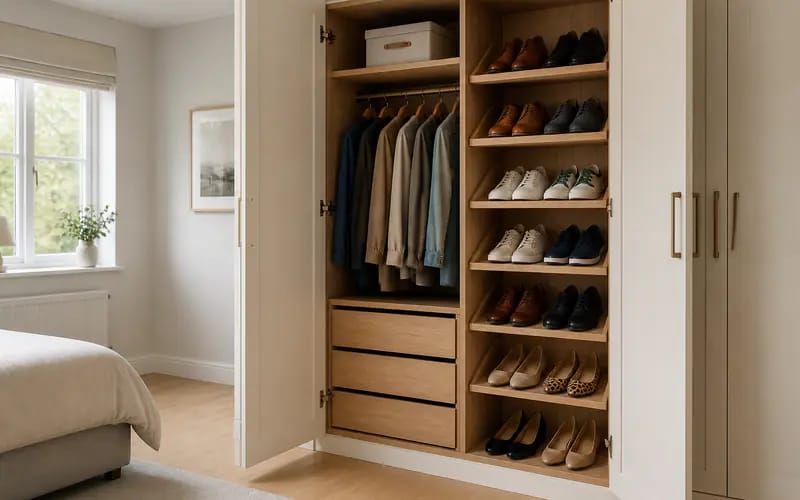
Shoes. A lot of people have a lot of them. They are generally heavy for their size and of unusual shape and so can be difficult to store. Here is how you can store your shoes in a fitted wardrobe.
Sort By How Often You Wear Them
Start by sorting out your shoes into daily wear and occasional wear. The most frequently worn items, such as work shoes, trainers and school shoes, should be stored at hip to eye level height so they can be easily retrieved. Less frequently worn items, such as formal shoes and other special occasion shoes, should be stored on higher or lower levels of the shoe storage.
Fit Angled Shelves For Visibility
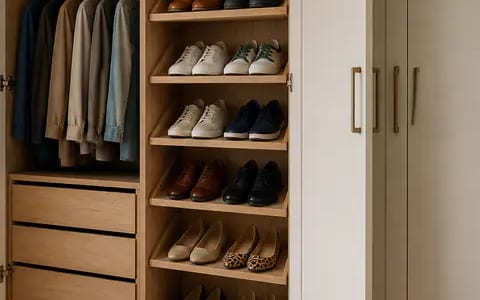
Flat shelves hide shoes beneath other shoes, meaning you need to move everything around to see what you have. By placing shoes on angled shoe shelves at a slight incline of around 15-20 degrees to the floor, the whole of the shoe is visible from below, even when stored in a closed position. The front of the angled shelf should have a small lip to stop the shoes from falling off the shelf.
Use Pull-Out Racks For Trainers And Flats
For trainers and flat shoes, pull-out racks or even shallow drawers of around 10-15cm deep would be suitable for storing these types of shoes. This is because they don’t have much height to them and storing them in this manner will keep them clean by being closed or semi-closed when not in use. Pulling out the rack will also allow you to see the back of the shoes housed on the pull-out.
Give Boots Their Own Section
Boots are best stored in taller open-sided storage, allowing them to stand upright and prevent them from slumping over and becoming creased at the ankle. A boot section will need to be built taller than the rest of the shoe storage and can contain boot shapers or even rolled magazines to help keep the boot shaped when not in use. Boots are easily damaged when stored sideways on a standard shelf and can quickly become scuffed.
Keep Heels And Delicate Shoes Separate
Individual slots or clear stacking boxes for Heels, Delicates & Embellished Shoes stop them scuffing against adjacent shoes, helping to preserve their uppers and keep them looking fresh. A clear box also means that you can see what you have stored in each without having to open up every individual shoe box. For Bespoke Fitted Wardrobes, see https://lamco-design.co.uk/bespoke-fitted-wardrobes/. More detail on advice on choosing a tradesperson is set out in the published guidance.
Keep Leather Shoes In Shape Between Wears
Use shoe trees to keep your shoes in good condition. For leather shoes that you do not wear on a regular basis, simply stuff them with acid-free tissue paper to stop them creasing. This will help extend the life of your good shoes.
Build In Ventilation To Stop Damp And Odour
In addition to the stored items themselves, it is also important to remember that in enclosed storage, in a built-up home, in a space with poor ventilation, there is nowhere for the moisture with the smell to escape. The Energy Saving Trust explain how to reduce condensation and damp in the home. This also applies to the storage of shoes and can be addressed with small ventilation gaps in the back or base of the enclosed section of storage and silica gel sachets or even just opened charcoal bags within each section of the shoe storage.
Rotate Seasonal Shoes Out Of The Way
There are many items of footwear that will be used less frequently than others throughout the seasons of the year and therefore will not need to be stored within the main body of the shoes stored in the wardrobes. Sandals, wellies and heavy winter boots are typical examples of these types of footwear that can be stored in lower drawers or at the less used end of the wardrobes or even in separate storage boxes which can be stored in the loft or other unused areas of the home.
Plan The Layout With Your Joiner From The Start
If you are planning a Fitted Wardrobe, incorporate a good shoe storage zone into the design. A joiner can build a configuration of shoe shelves, a boot store and of ventilated drawers to the exact number of pairs of shoes that your household possesses. Quality fitted furniture is made to recognised furniture industry quality standards. It is also worth checking the current building regulations for home alterations that involve moving walls or affect fire escape routes.
Getting the shoe storage area set up correctly in the first place will mean that your storage area will remain organised with minimum additional effort, as it is one of the areas that you will be using on a daily basis.